
Outside the system

Andy Burnham’s Cabinet Represents Starmerism Without Starmer

The new Prime Minister promised radical change, yet his picks for the Cabinet tell a very different story, argues Adam Bienkov
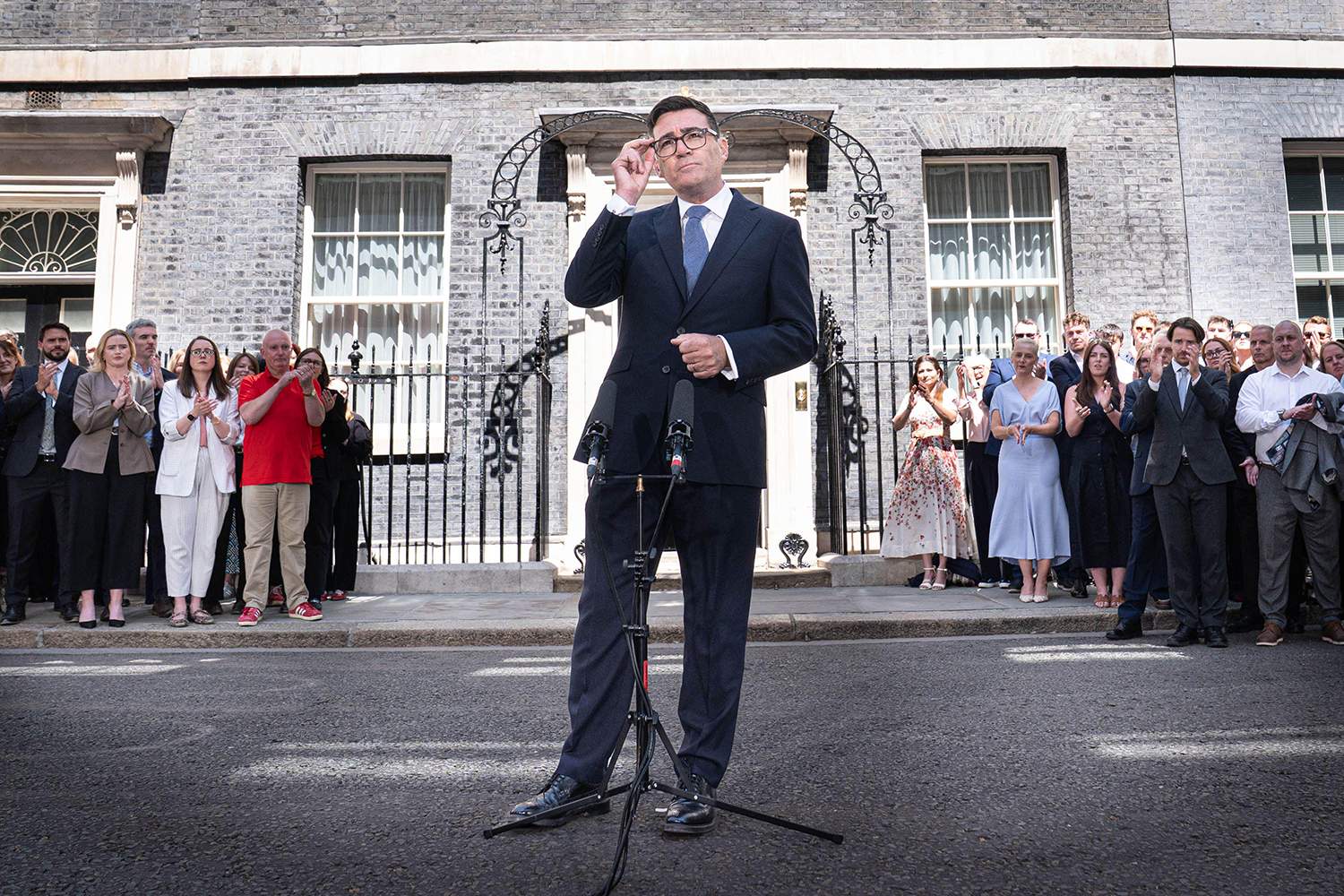
New Prime Minister Andy Burnham makes a speech outside 10 Downing Street, London, after meeting King Charles III and accepting his invitation to become Prime Minister and form a new government. Photo: PA Images / Alamy

Read our Monthly Magazine

And support our mission to provide fearless stories about and outside the media system

Andy Burnham promised to “rewire Britain” in order to end “40 years of neo-liberalism”.

What his first Cabinet has actually offered is something quite different. 

Despite entering Downing Street on a promise to radically change how politics is done in Westminster, Burnham’s picks for the top jobs largely offer continuity with what has come before.

Whilst many Starmer loyalists have been purged from office, their replacements are broadly like-for-like. 

Rachel Reeves, who was derided by some of Burnham’s keenest supporters as a needlessly conservative barrier to radical change, has been replaced by a Chancellor in John Healey whose politics appear to be largely indistinguishable – beyond being slightly more keen to increase spending on defence.

If Healey really does have a burning ambition to “end 40 years of neo-liberalism” then it is an ambition he has kept very closely to his chest.

By picking Healey as Chancellor, Burnham passed over his first choice for the job in Ed Miliband, following a concerted media and big business campaign to block him for supposedly being too radical. 

Burnham’s second choice in Shabana Mahmood, was similarly passed over following a backlash from Labour MPs concerned about installing this committed ‘Blue Labour’ politician in Number 11.

By opting not to alienate either side of his support base, Burnham has ended up with a Chancellor who neither worries, nor excites either. It is, in essence, a thoroughly Starmer-esque choice.

Burnham Wins in Makerfield: Can the ‘Politics of Place’ Now Offer an Antidote to the Poverty of Possibility?

Having been on Reform UK’s target list as a winnable seat, Andy Burnham’s new constituency is a microcosm of Brexit Britain and the failed legacies of Thatcher and Blair. Peter Jukes and Hardeep Matharu paid a visit ahead of its seminal by-election

Elsewhere in the Cabinet there are many familiar faces. 

Mahmood, passed over as Chancellor, has been kept in the Home Office instead, where she will be free to continue with her hardline immigration and asylum plans.

This decision, received warmly by Britain’s deeply anti-migrant press, is consistent with Burnham’s own longstanding anti-migrant politics. Throughout his career, Burnham has called for both the last Conservative Government and its Labour successor, to go even further in reducing the ability of people to come to live, work, or seek refuge in the UK. After two years of a Labour Government which gradually whittled away at the rights of migrants and refugees, Burnham has opted to continue with more of the same.

Wes Streeting, who had been mooted as a potential replacement for this job, but who was seen as being mildly more pro-immigration, has been sent to Defence instead.

Lisa Nandy, the least active member of Keir Starmer’s government, who was widely regarded as having been deeply ineffective as Culture Secretary, but who was nonetheless a close friend of the new Prime Minister, has been kept in her job. 

The familiar faces continue elsewhere, with Angela Rayner brought back as Housing Secretary, and Yvette Cooper moved over to Health. Miliband, denied the job he was most qualified for, has been shunted over to the Foreign Office. 

For a Government supposedly offering a radical departure from what has come before, there are almost no genuinely new names in Burnham’s Cabinet. One exception to this is Miatta Fahnbulleh, who has been brought into replace Miliband as Energy Secretary.  An imaginative left-wing economist, who is deeply committed to climate action, Fahnbulleh is a good example of the sort of positive change that Burnham offered, but largely failed to deliver with this Cabinet.

Very male, broadly stale, and overwhelmingly pale, Burnham’s Cabinet is a long way from representing the sort of radical change that his supporters on the left hoped he might.

At best it represents Starmerism without Starmer – an unueasy mishmash of the soft left and old right, with any vestiges of liberalism on migration, or the economy, squeezed to the margins.


A Change of Salesman

By installing Burnham in Number 10, the parliamentary Labour party appears to have decided that the big problem with the last two years was not the policies, but the man selling them. 

There may be some truth to this. Burnham is clearly a far better public speaker and political salesman than his predecessor ever was. His speech outside Downing Street on Monday appeared to offer real hope and optimism where Starmer and Reeves offered little.

His focus on ending rough sleeping was also welcome, as was his promise to offer voters “breathing space” from rising living costs. If he delivers on these pledges, whilst continuing to tell a convincing story about where he wants to take the country, then he has an excellent chance of persuading voters to reject the politics of hatred and division represented by Nigel Farage and his fellow travellers.

This is not nothing. Had Starmer remained in Number 10 then we would almost certainly have headed towards the catastrophic outcome of a Reform Government, with all the chaos, division and hatred it represents. 

However, real change should not just be about marketing. Real change should not just be about keeping the same basic product, but changing the salesman. 

Of course it is still very early days. In the coming hours Burnham will announce his “first steps” to easing the cost of living, ahead of a new “ten year plan” for changing Britain, set to come in the autumn.

With a much more human touch, and a set of impressive political skills and instincts mastered over a decade in Manchester, Burnham has a real opportunity to offer the country a break, both from the failed politics of the last Conservative Government, but also from those of Starmer and his former adviser Morgan McSweeney.

ENJOYING THIS ARTICLE? HELP US TO PRODUCE MORE

Receive the monthly Byline Times newspaper and help to support fearless, independent journalism that breaks stories, shapes the agenda and holds power to account.

We’re not funded by a billionaire oligarch or an offshore hedge-fund. We rely on our readers to fund our journalism. If you like what we do, please subscribe.

On this there are still reasons to be optimistic. His promise of radical devolution should be welcomed, as should the signals that he plans to reform our outdated electoral system and protect our democracy.

His commitment to dramatically increase social house building is also encouraging – something Healey himself has long advocated.

Yet in order to achieve these things Burnham will need to demonstrate his determination to push ahead with his plans, no matter how much opposition they receive from big business, the established press, and even the trade unions.

Unfortunately, all of the evidence from his Cabinet picks is that this is a hard-headed determination which he currently lacks.


Written by

This article was filed under
, , , ,