
 Subscriptions

Read our Monthly Magazine
And support our mission to provide fearless stories about and outside the media system
On August 15, 2025, in the city of Anchorage, Alaska, on the territory of a U.S. Army military base, a Russia–U.S. summit took place, which many journalists have already dubbed the “Alaska Summit.” The key topic of the meeting was the resolution of the military conflict in Ukraine. However, a significant number of analysts initially did not expect any political breakthrough regarding the Russian-Ukrainian war.
And this is quite understandable: although the war was officially at the center of attention, for most observers it was clear that the event was rather symbolic in nature, typical of modern political technology. What mattered more was the very fact of the meeting, its setting, the chance to outmaneuver one another in subtle diplomatic details, to provide the press with polished photographs, to utter the “right” words, to pull Putin closer during a handshake, and many other gestures—while at the same time offering no real mechanisms for a ceasefire or for achieving a just peace settlement.
This performative symbolism was visible from the very beginning. The summit was not thoroughly prepared; it was organised hastily, without serious preliminary consultations, which in itself looked like yet another political trick by the Trump administration.
Earlier, Trump had threatened Moscow with harsh sanctions if, within ten days, there were not at least some formal prospects for a peace agreement in the war in Ukraine. In essence, this was an ultimatum issued by Washington to somehow demonstrate determination and showcase the activity of American diplomacy. But in reality, it only cornered the White House, because behind such loud statements, there were no real levers of influence.
For Putin, this meeting was not a platform for negotiations, but above all an instrument of political legitimisation. On the one hand, it was an opportunity to show the world that he is still being received, that he is capable of holding dialogue on equal terms with the President of the United States, despite the warrant of the International Criminal Court and his de facto political isolation.
On the other hand, it was a signal to his close circle and his domestic audience: “I am still capable of something, I am still being taken seriously, and I remain a figure of international stature.” For Putin, this is no less important than the war itself, because in the Russian system of power, personal demonstrations of strength and “handshake-worthiness” are often valued more highly than any real diplomatic results.

Inside the Collapse: How Putin’s Russia Turned Its Opponents into Exiles
There is a deliberate policy by the Kremlin to exile, neutralise, and effectively erase alternative political life within the country, reports Denis Mikhailov
The Aspirations of the United States
From the very start of his presidential campaign, Donald Trump tirelessly repeated that he could end the war in Ukraine “in just one day” once he became president. He insisted that he possessed special mechanisms of influence over the parties to the conflict, that he knew the “secret levers,” and that he would act in ways no previous American leader had been able to.
These bold claims sounded impressive during the election race, but from the moment of his election and inauguration, reality proved entirely different. Neither in the first 100 days nor afterwards did the situation shift even an inch. On the contrary, at times, tensions between Kyiv and Washington reached unprecedented levels.
At one point, Trump’s inner circle even discussed the possibility of reducing—and eventually completely cutting—military aid to Ukraine. For Kyiv, this looked like a stab in the back, while for Moscow, it was a long-awaited signal of Western weakness and fatigue. And then, shortly before the summit itself, Trump once again chose to play for effect: he announced a specific deadline, after which he promised to impose heavy sanctions on Russia. At first, this deadline was set at 50 days, but then it was shortened to just 10—effectively to August 7, 2025, right at the moment of final confirmation of the Alaska summit.
From this, one important conclusion can be drawn: the initiator of the public meeting between Russia and the United States was, to a greater extent, the United States itself. The Trump administration had become a hostage to its own campaign promises, which had been unrealistic from the very beginning. The American president had built an image of a “strong negotiator,” capable of ending the war with a single decision, but when faced with harsh reality, he was forced to act more like a sapper—cautiously, groping for solutions, using any available diplomatic mechanism, if only to create at least the illusion of progress.
In the end, the summit became less an attempt to resolve the conflict and more a tool for salvaging the reputation of an American president eager to prove that he was in control, even when the facts suggested otherwise.
Russia’s Aspirations
From the very first days of the war, the Russian side has tirelessly repeated that it is supposedly ready for negotiations. Yet Moscow’s entire stance toward Kyiv appears blatantly detached from reality. From the beginning up until today, the conditions the Kremlin has put forward to Ukraine are tantamount to an ultimatum—essentially the same as if Kyiv had laid down its arms and signed a capitulation in the very first days of the invasion. This is not a negotiating position at all, but rather dictation disguised as “dialogue.”
Meanwhile, Russia, as the aggressor, has found itself in a state of unprecedented economic and political isolation. True, the effectiveness of economic sanctions is sometimes debated: some argue that Russia is adapting, seeking loopholes, building “shadow” trade schemes. But when it comes to political isolation, there is no debate.
Putin and his closest circle have been effectively erased from global politics: an arrest warrant has been issued against the Russian president by the International Criminal Court, the country’s leading state institutions have been expelled from international organisations, and the overwhelming majority of key power figures are under personal sanctions. Even those long regarded as diplomatic heavyweights are today deprived of the ability to travel freely and participate in international politics.
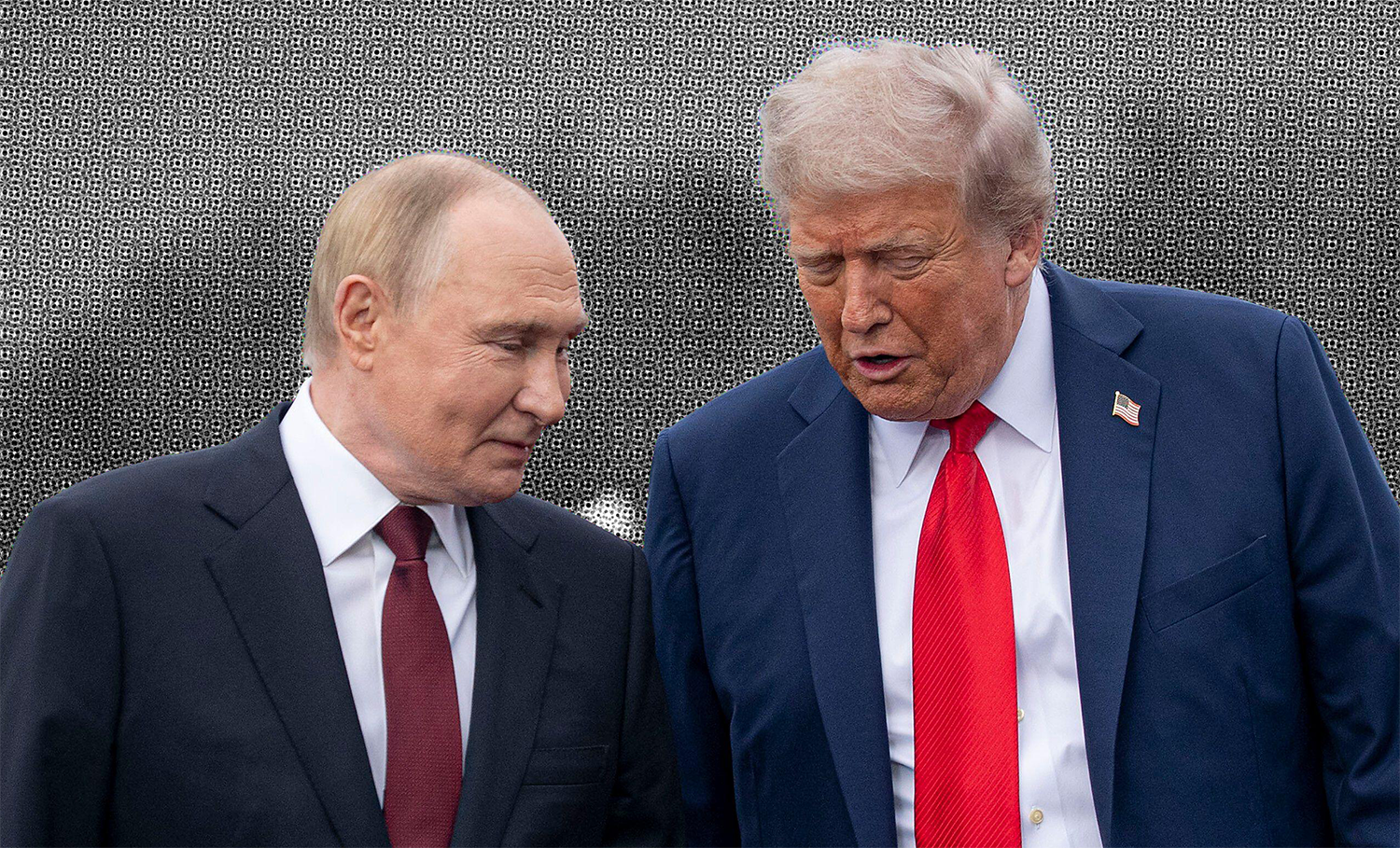
The Real Story of the Trump-Putin Summit Is a US Oil Deal Hiding in Plain Sight
While no progress was made towards a Russia-Ukraine ceasefire, the Kremlin opened the door to a deal that could pour billions into its own war coffers
Everything happening on the territory of Ukraine should, in all fairness, culminate in a political tribunal for Putin’s system. The scale of destruction, the human casualties, the proven facts of war crimes – all of this creates a legal and moral foundation from which Moscow cannot escape. That is precisely why the Kremlin will seize any opportunity to break through its isolation and return to international platforms.
A striking example was the visit of Valentina Matviyenko, the head of Russia’s Federation Council, to a forum in Geneva, which took place shortly before the Alaska summit. She was under comprehensive sanctions, yet nonetheless appeared on the international stage.
And it is important to understand: Matviyenko is not an ordinary official.