
 Subscriptions

Read our Monthly Magazine
And support our mission to provide fearless stories about and outside the media system
The recent publication of BP’s damning internal memos exposes what many artists, performers, writers and arts workers have long argued: that corporate sponsorship is a transaction, not a donation.
In its own words, these documents reveal how BP uses cultural sponsorship as a means to “secure public support and advocacy from partners to mitigate risks and advance business interests”.
For BP, influential cultural figures are co-opted as fossil fuel industry “enablers and defenders”, and our cultural institutions leveraged in order to reach “high-level decision-makers” and – exceeding even the most sceptical of expectations – to “mitigate against the impacts of possible litigation”.
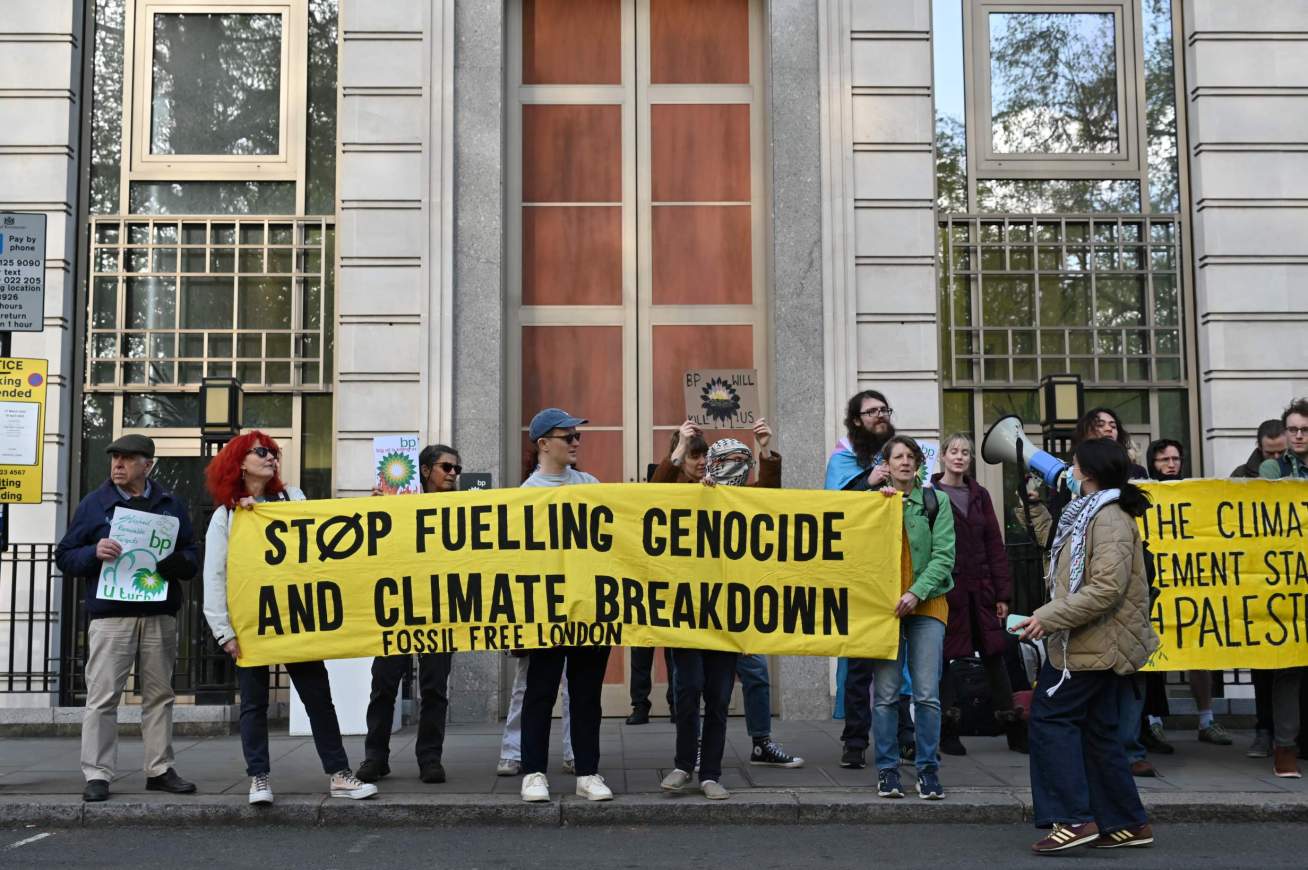
This poses an urgent question for those museum directors who continue to take BP’s dirty money: will you cut ties to BP now that its cynical use of your institutions has been laid bare and an ethical red line has clearly been crossed?
Captured Culture
BP is, as always, in need of some good PR. In February, BP completed an astonishing yet hardly surprising U-turn by backtracking on its already weak carbon reduction targets, deciding that it could make more money by simply having no targets at all.
At the same time, it has also come under scrutiny for its role in providing a significant source of fuel to the Israeli military, enabling the genocide of Palestinians.
Who were virtually the only voices to rush to BP’s defence as it announced its pivot ‘back to petroleum’ and increasing oil and gas production? The British Museum and the Science Museum of course, apparently eager to play their part as BP’s “powerful third party advocates for issues that are critical to our business”.
Right on cue, they both named BP’s support as “vital” to their institutions, giving BP its only positive publicity in the same week that it decided to openly stop caring about the death and destruction that it fuels as one of the world’s biggest contributors to climate breakdown.
The Director of the Science Museum, Sir Ian Blatchford, has for years given credibility to BP’s previously desired image as “a fossil fuel company that is playing its part in addressing the climate challenge”, as outlined in one of the newly exposed documents.

As if reading from the same script, Blatchford has repeatedly repeated the line that “the major energy companies have the capital, geography, people and logistics to be major players in finding solutions to the urgent global challenge of climate change”, even while BP continued to invest in new oil and gas extraction and obstruct the solutions that were so urgently needed.
Despite BP changing its line, the Science Museum is still finding a way to justify its sponsorship deal and argue that BP plays a positive role in the world against the unchanging scientific reality that we must urgently reduce carbon emissions.
Similarly, when The British Museum’s announcement of a new 10-year deal with BP at the end of 2023 was met with resounding criticism, Nicholas Cullinan, Director of The British Museum, chose to defend the institution’s decision to accept BP’s £50 million payment on the rather low-bar basis that the money was “legally acquired”, and made the readily refutable claim that, without BP, the Museum would no longer remain free to the public.
Polluted Politics
When Cullinan then pondered why activists protest about climate change at his museum and not at Parliament Square (although they also definitely do protest there), he ignored the long history of BP using the museum as a prominent platform for its lobbying.
A 2019 memo clearly sets out how BP’s cultural sponsorship in the US provided “elevated access to and recognition with decision-makers who regularly attend events” – just as it does in the UK.
Last year, former UK Culture Minister Lord Ed Vaizey welcomed BP’s new sponsorship deal with The British Museum on primetime TV, while then Culture Minister Lucy Frazer proclaimed that “we should thank BP”.
Last month, former Shadow Culture Minister and Peer Thangham Debbonaire also defended fossil fuel sponsorship, judging opposition “pointless” and claiming that corporate sponsors like BP were “willing to listen” despite the company clearly committing to business as usual.
With them all falling into line with BP’s stated aims of accessing political figures and securing “public support and advocacy” through cultural sponsorship, BP will consider its loose change well spent.
BP’s long-running sponsorship of The British Museum’s major exhibitions has also helped to extend its global reach. Sponsoring several exhibitions on Egypt since 2010 has allowed BP to court decision-makers within successive repressive Egyptian governments, while the special Mexican ‘Day of the Dead’ festival that it sponsored in 2015 – where it also met with Mexican politicians at a VIP reception – conveniently fell just ahead of BP bidding for new drilling licences in the Gul