
 Subscriptions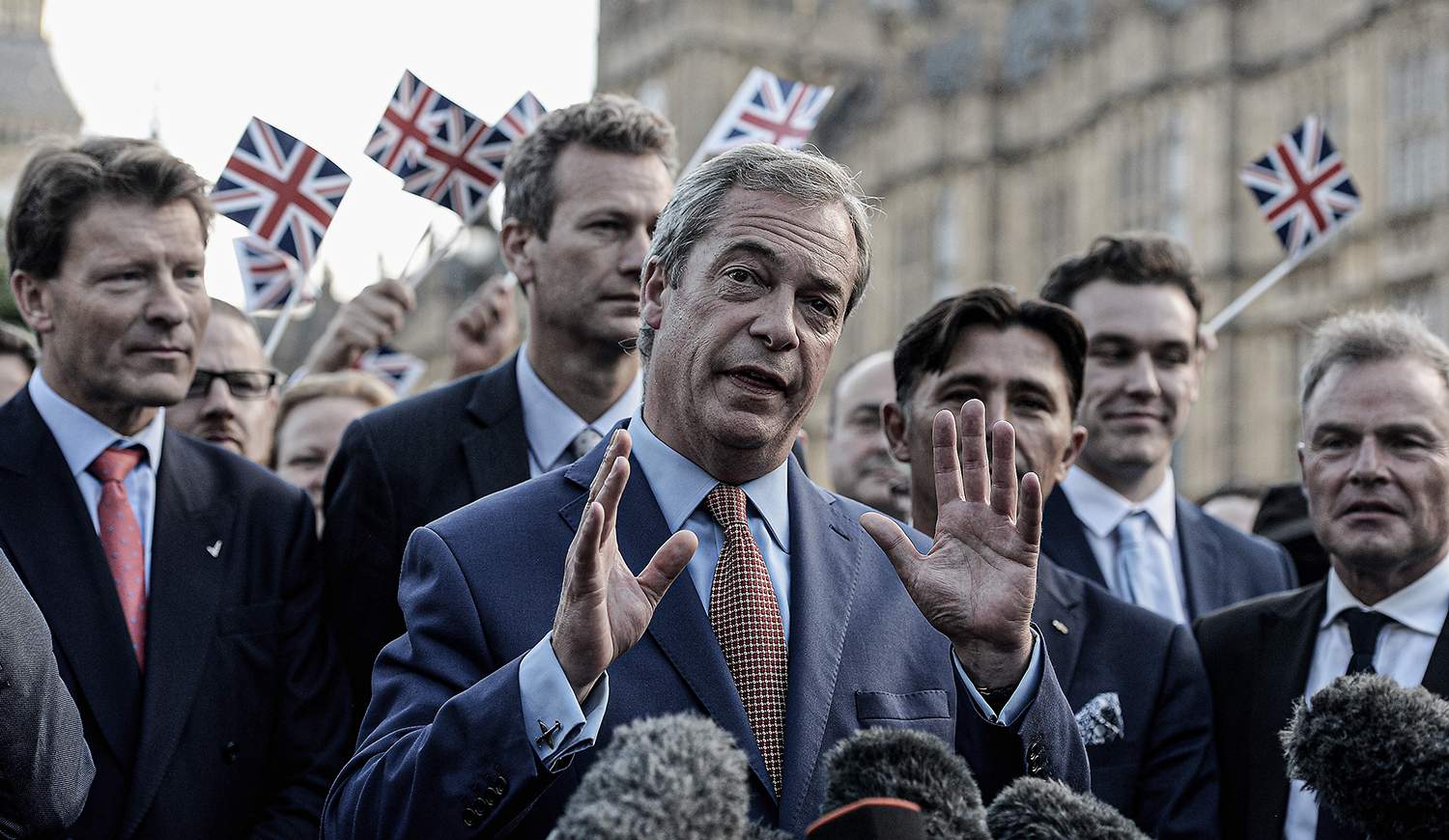
Read our Monthly Magazine
And support our mission to provide fearless stories about and outside the media system
It has taken ten years: ten years since the first evidence emerged of Russian social-media accounts pushing for Brexit. Eight years since the FBI’s Mueller Report and the Digital, Culture, Media and Sport (DCMS) Committee exposed the extent of Kremlin “information warfare” against the United States and the UK.
And six years since the Intelligence and Security Committee’s Russia Report – which revealed Russian financial-influence operations in UK political parties – was suppressed by Boris Johnson.
Speaking on the Rest Is Politics podcast, Prime Minister Andy Burnham confirmed what many journalists, lawmakers and campaigners have said for years:
“There is certainly misinformation, disinformation that is emanating from Russia into German politics… But I asked the question coming to Downing Street: was there interference in the 2016 referendum from Russia? And I’ve had the clear answer that yes, there was.”
This is the first time the British state has openly recognised something accepted by other intelligence agencies in the US and Europe, that Brexit was a target of Putin’s disinformation warfare.
Theresa May, while warning Russia that it was being closely watched after the Novichok attack in Salisbury, and expelling an unprecedented number of Russian diplomats, never tasked her intelligence agencies to investigate further.
Her Foreign Secretary, Boris Johnson, told Parliament that he had seen “nyet… not a sausage” of Russian interference. As previously reported by Byline Times, Johnson made that claim despite the ISC’s findings on online bots and trolls around the 2016 Brexit vote and the US presidential election.
However, addressing the UN in late September, Burnham did not shy away from calling out the Kremlin’s attack on democracy: “We have evidence that they tried to interfere with the 2019 general election. We also know that they have tried to stoke tensions and unrest in the wake of horrific events,” he said.
Talking to Alastair Campbell and Rory Stewart, he went further, acknowledging that the interference went back to the crucial EU referendum vote, and saying that voters had not been informed “sufficiently about the extent to which people are seeking to disrupt the political process from overseas”.
It is an overdue acknowledgment that one of the most momentous constitutional decisions in post-war Britain – decided by a narrow two per cent swing in the referendum vote – might not have been fairly and transparently conducted.
The key figures in the two Leave campaigns – Nigel Farage, for Leave.EU, and Boris Johnson, for Vote Leave – were repeatedly connected to Russian influence networks.
As previously reported by Byline Times, Sergey Nalobin, a Russian Embassy first secretary linked to the Kremlin’s “active measures”, cultivated senior Conservatives and Brexit campaigners, including Johnson and Vote Leave chief executive Matthew Elliott.
The close proximity of Nigel Farage and Russian officialdom has long been documented. Not only did he deny a documented 2013 meeting with the Russian Ambassador, Alexander Yakovenko, and subsequently receive payment for regular appearances on the Kremlin-backed channel RT (formerly Russia Today); he also told GQ that Putin was the leader he “most admired”.
As Carole Cadwalladr and I revealed in 2018 in The Observer, Arron Banks – the major funder of Farage’s Leave.EU campaign, whose £8 million donation set a record at the time as the biggest ever in a British political campaign – made multiple undisclosed visits, along with other officials, to the Russian Embassy in the lead-up to the EU referendum.
During those undisclosed meetings, emails obtained by us revealed discussions of potentially beneficial arrangements over the privatisation of Russian gold and diamond interests..
Banks denied that any Russian money figured in his donations to Leave.EU. But the mere fact of Kremlin interest in Brexit, and in its outcome, is undeniable.
As the DCMS Select Committee reported later in 2018, analysis of social-media accounts suspected of being Russian proxies – and later involved in the well-documented Russian interference in Donald Trump’s 2016 election – played a role in pushing for Brexit.

The Five Questions Nigel Farage is Never Asked About Brexit, Trump and Russia
As the media provides the Reform Leader with a prominent platform, Peter Jukes considers all the concerning lines of enquiry that journalists never confront him with
Meanwhile, as Carole Cadwalladr and I subsequently detailed in our award-winning podcast Sergei and the Westminster Spy Ring, the Kremlin’s interest in Farage’s party – which was mainly run by the expelled spy Alexander Udod – was channelled through another Russian Embassy operative, Sergei Nalobin, who helped establish Conservative Friends of Russia in 2012.
Beyond Johnson’s links with Nalobin, and with another suspected Russian agent, Joseph Mifsud, the former mayor of London also had a deep connection with the former KGB section chief Alexander Lebedev. Along with his son Evgeny, Lebedev took over The Independent and the Evening Standard in 2008. As Byline Times reported, further connections between Johnson and Russian influencers, including Mifsud, subsequently emerged.
For the next ten years, Johnson was a regular attendee at the often wild Lebedev parties in London and Umbria – even when Alexander Lebedev was working closely with the Kremlin in Crimea following its annexation by Putin in 2014.

The Johnson-Lebedev Letters: A Back-Channel to Vladimir Putin?
Letters exclusively obtained by Byline Times, between Boris Johnson and Evgeny Lebedev, shed new light on how the son of a Russian oligarch and former KGB officer built such a close relationship with Britain’s Prime Minister
During the EU referendum, Johnson blamed the first war in eastern Ukraine on the EU rather than Russia. One of his first actions on becoming prime minister in late 2019 was to ennoble Evgeny Lebedev as a member of the House of Lords, against the advice of the security services. .
From the beginning of his premiership, Johnson sought to suppress the Intelligence and Security Committee’s Russia Report on the Kremlin’s financial and political influence operations in the UK.
The report was eventually published in 2020, with some elements redacted for security reasons. As we reported at the time the report found the Government had “actively avoided” looking for Russian interference during the 2016 EU referendum.
Christopher Steele, the former head of the security services’ Russia desk, revealed on Sergei and the Westminster Spy Ring, that some of those redacted annexes are likely based on his findings that Russian money was channelled into the Brexit campaign.
Following Burnham’s comments, Steele told Byline Times: “We have known that Russia tried to interfere in the 2016 Brexit referendum since at least 2017 and whilst it is difficult to quantify exactly what impact this may have had on the vote, the fact that it has never been properly investigated by the British Government is both regrettable and irresponsible.
“Regrettable because the British people have the right to know what role a hostile foreign power, in this case Russia, played in arguably the most consequential democratic decision in modern peacetime and irresponsible, because their failure to do so will have encouraged the Kremlin in its efforts to interfere in UK elections and politics subsequently. There needs to be a full inquiry on Russian interference now, with its suitably sanitised (to protect sources and operational methods) results made public.”
Keir Starmer
While Johnson’s self-interested reasons for not seeing a “sausage” of Russian interference are clear enough, more mysterious has been the inactivity of the Labour Party – especially given the key roles on this issue played by Labour MPs Ian Lucas and Ben Bradshaw.
However, the revelations in the release of the Epstein files concerning former Labour lord Peter Mandelson’s close connections with the disgraced paedophile billionaire may offer some clues.
Byline Times has reported on Mandelson’s Russian connections and Palantir lobbying links, including his introduction of Epstein to Oleg Deripaska.
Emails released by the US Department of Justice earlier this year confirm the proximity between the former peer and one of Putin’s favoured oligarchs, Oleg Deripaska.
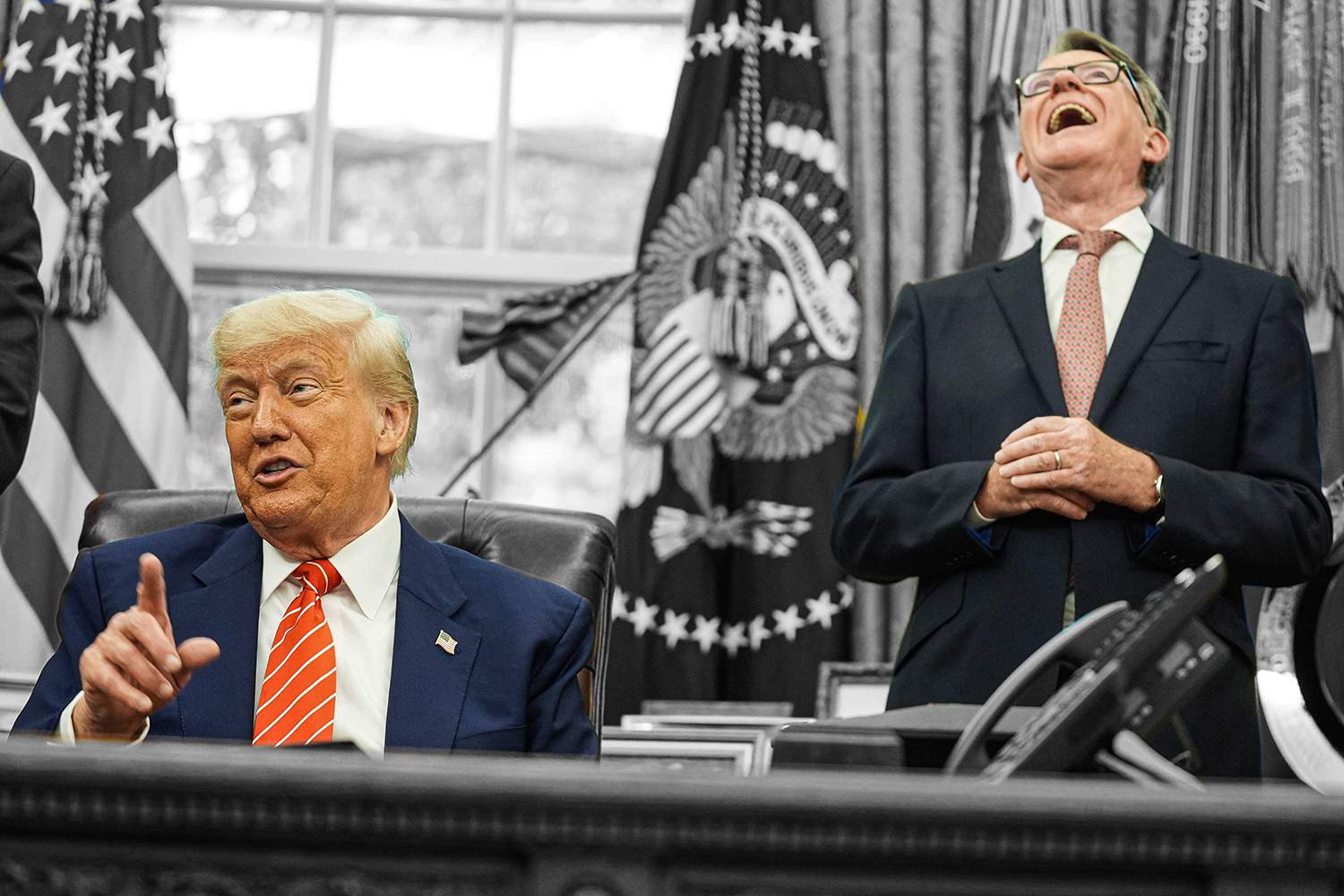
Revealed: Peter Mandelson’s Russian Connections and Palantir Lobbying Links
The disgraced peer was appointed by Keir Starmer’s Government despite warnings about his role on the board of a Russian defence conglomerate linked to Moscow’s early-warning missile systems
Mandelson was sacked by then-prime minister Keir Starmer because of his undisclosed continuing relationship with Jeffrey Epstein, even after Epstein had been sentenced and imprisoned for sex offences involving a minor. He is currently under investigation by the Metropolitan Police for misconduct in public office. Byline Times reported that the investigation concerns the alleged leaking of highly sensitive government information to Epstein.
Epstein himself had multiple connections with Russia. The released emails indicate that he was in regular contact with Kremlin officials, introducing them to Palantir co-founder Peter Thiel.
In an email to Thiel after the EU referendum result, Epstein claimed: “Brexit is just the beginning”, and celebrated the opportunities of a “return to tribalism”.
More examples of Russian interference are bound to emerge. Only last year, Nigel Farage’s close aide Nathan Gill was sentenced to ten and a half years in prison for receiving bribes, via proxies, from Putin’s “man in Ukraine”, Viktor Medvedchuk. Police inquiries are still ongoing. Byline Times reported on Gill’s sentencing and his role in promoting Kremlin narratives.
After the Gill affair, the Government announced the Rycroft Review to assess the dangers of foreign interference – but Matthew Rycroft was given a remit extending back only as far as 2019.
For too long, and for political reasons, Brexit has been kept off the agenda in terms of Kremlin meddling.
The extensive nature of Russian influence operations over the past 15 years has compromised the British state and senior politicians to such an extent that they have felt too embarrassed – or too compromised – to investigate fully how extensive it has been.
Burnham’s honest approach offers the possibility of finally coming to terms with the nature of modern hybrid warfare, and with the extent to which British politics has been vitiated by foreign interests and foreign cash.
As Burnham explained in his reference to Germany and France, the point is not to relitigate the EU referendum – although, given the level of interference, there is scope for that.
For the sake of our cognitive security and democratic resilience, it is important to expose the various alternative measures – fake-news sites, online bots, direct social interference, financial inducements, blackmail and assassinations – that Putin has clearly deployed in elections in Moldova, Czechia, Bulgaria and Romania, and is now crucially turning on the looming elections in Germany and France.
The fifth battlespace – information war – was long Putin’s special weapon.
On this hidden front, denied cover by the mainstream media, many of us have been fighting for years like partisans in the mountains.

On the Frontline of Exposing the Truth About Russia and Brexit
Four years ago, Tom Mutch thought he had the ‘scoop of the century’ blowing open Russia’s involvement in Brexit. Now, after the UK has left the European Union and Putin wages genocidal war in Ukraine, he wonders whether we are any closer to knowing the truth
And finally, the countries and democracies we tried to protect have recognised the reality, and have no excuse not to arm themselves for the next onslaught by investigating the past.