
 Subscriptions
Read our Monthly Magazine
And support our mission to provide fearless stories about and outside the media system
Andy Burnham should use his National Commission on Electoral Reform to launch a conversation on making voting compulsory, experts have suggested.
The Prime Minister announced the plans – which are set to endorse a new voting system for Westminster elections – in his Labour conference speech in Liverpool last week.
Now backers of compulsory voting say it is an opportunity to end low turnout in Britain. In doing so, they say he could drastically close the gap between the power of the high-turnout wealthiest voters, and the poorest who stay at home in disproportionate numbers.
It would also, a new report argues, help end the imbalance in voter power between generations, as older voters turn out in high numbers and younger voters sit out elections in far larger numbers.
Andrew Blick, Professor of Politics and Contemporary History at King’s College London, believes any reform to the system Brits use to vote “must include measures aimed at increasing electoral turnout”.
ENJOYING THIS ARTICLE? HELP US TO PRODUCE MORE
Receive the monthly Byline Times newspaper and help to support fearless, independent journalism that breaks stories, shapes the agenda and holds power to account.
We’re not funded by a billionaire oligarch or an offshore hedge-fund. We rely on our readers to fund our journalism. If you like what we do, please subscribe.
“If we simply change how voters cast their ballot instead of who casts their ballot, we risk failing to maximise the possible gains for a fairer society,” Professor Blick said.
Will Snell, chief executive of the Fairness Foundation, agrees, arguing the Prime Minister is right to “acknowledge that there is a fundamental issue of inequality in our electoral system”.
“If you are poor, you’re less likely to vote and less likely to be the focus of politicians’ concerns.
“That’s why any major review of our electoral system cannot be limited to discussions around systems and processes, but must be about the importance of who votes.”
Charles White, from the Campaign for Compulsory Voting, said the National Commission “cannot just be about how people vote, but who votes”.
“We need to address our country’s woeful turnout, and the only tried-and-tested solution in a democracy is the Australian model of compulsory voting.”
And Dr Nick Garland from the progressive think tank IPPR also joined the calls, saying democratic change is “essential”: “The national commission is an opportunity for a debate about our democracy more widely.” He believes it could also be an “opportunity to tackle our low and unequal turnout through an Australian-style compulsory voting system”.
The Triple Lock Question
This week a report added extra weight to their calls – and it may be read with interest in Labour HQ.
Adopting compulsory voting would, according to new Fairness Foundation analysis, sidestep some of the political costs of amending the pensions triple lock. Pensioners are now less likely to be in poverty than the rest of the population, and half as likely as children. Pensioners are also far more likely to vote than younger people.
While pensions rise by the highest of average earnings, inflation or 2.5% every year – there is no annual uplift at all for Local Housing Allowance or the benefit cap. Universal Credit elements like child, carer and work allowances are reviewed annually at ministers’ discretion, alongside Jobseeker’s Allowance, Employment and Support Allowance, income support and housing benefit personal allowances. In effect, they have a weak ‘single lock’, in pension terms.
Writing in the report, crossbench peer Baroness Polly Neate, former CEO of Shelter, says compulsory voting “would give Burnham the political cover and popular support to deliver” the changes he announced in his speech.
Don’t miss a story
“The people most likely to back reform, including younger voters, would be at the ballot box to reward a government that took on intergenerational inequality. Compulsory voting brings everyone into the decision, those directly affected and those who aren’t, encouraging a more considered response to major policy choices,” Baroness Neate says.
The Prime Minister’s rallying cry to ensure “everyone’s vote counts and everyone’s voice is heard” pricked the ears of those battling against low turnout in UK elections.
The Fairness Foundation, an independent think tank, says a “distorted” electorate through low turnout has a major impact on the political incentives politicians face.
Charles White, who wrote the report for the group, said: “Our democracy suffers from a profound conflict of interest: leaders are discouraged from building a more equal society because the half of the population who vote profits from the current imbalance.
“How else to explain the survival of the pension triple lock, a policy dismissed by Conservatives as a Ponzi scheme, yet preserved by successive Prime Ministers to appease the groups which vote?”
The Missing Half
In the report, The Missing Half, the Fairness Foundation finds that those who do not vote are disproportionately poorer and more housing insecure.
The report calls for compulsory voting to be introduced alongside a ‘None of the Above’ option added to ballot papers, to tackle both rising inequality across the country but also the threat posed by “extremist politics on the left and the right”.
Labour MPs including Chris Curtis have recently backed the ‘None of the Above’ proposal. Former Labour leader Neil Kinnock and former Home Secretary David Blunkett have also urged Burnham to introduce compulsory voting to slash political inequality. Testing by Convergent Opinion earlier this year found that the presence of a “None of the Above” option shifted support away from ‘non-traditional’ parties, while coming at the expense of Reform in particular, by as much as four percentage points.
Andy Burnham’s Pledge for Electoral Reform: What We Know So Far
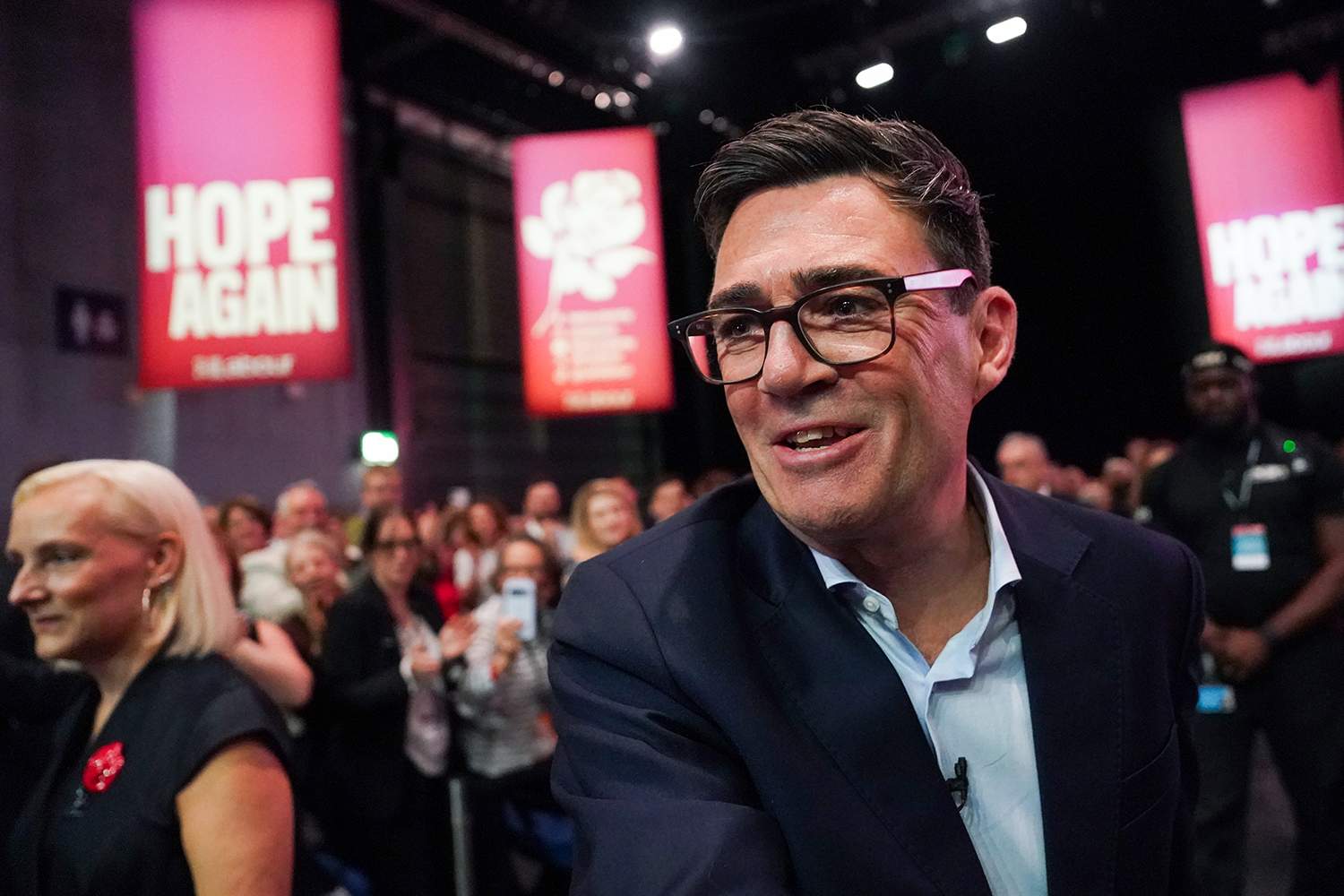
After years of pressure from campaigners, a Labour Prime Minister has now finally committed to overhauling Westminster’s First Past the Post voting system, reports Josiah Mortimer
According to the Institute for Government, the average turnout in Mayoral elections in 2024 and 2025 was 31%, and the figures for local council elections are similar.
Polly Neate writes in the new Fairness Foundation report: “The pensions triple lock is protected by voter power. That’s how politics works, but it isn’t how democracy should work, and it certainly doesn’t give fairness a chance.”
Baroness Neate also backs making General Election days public holidays: “The Australians hold a barbie to entice voters in. That’s a bit weather-dependent for us lot. Scones anyone? Jam? Cream? A nice hot cuppa? Actual democratic accountability? Yes please.”
Growing Momentum
Momentum appears to be growing. ThinkLabour and the IPPR both published reports calling for compulsory voting in the first half of 2026, and were backed by the chief executive of the left-leaning think tank Demos.
In 2022, the Fraser of Allander Institute found that “health and income inequality are consistent predictors of voter turnout in Scotland”.
“In the 1987 UK general election, the turnout recorded for the poorest income group was 4% lower than for the wealthiest. By 2010, the gap had grown to a sobering 23 points,” said political thinker Jonathon Shafi of the report.
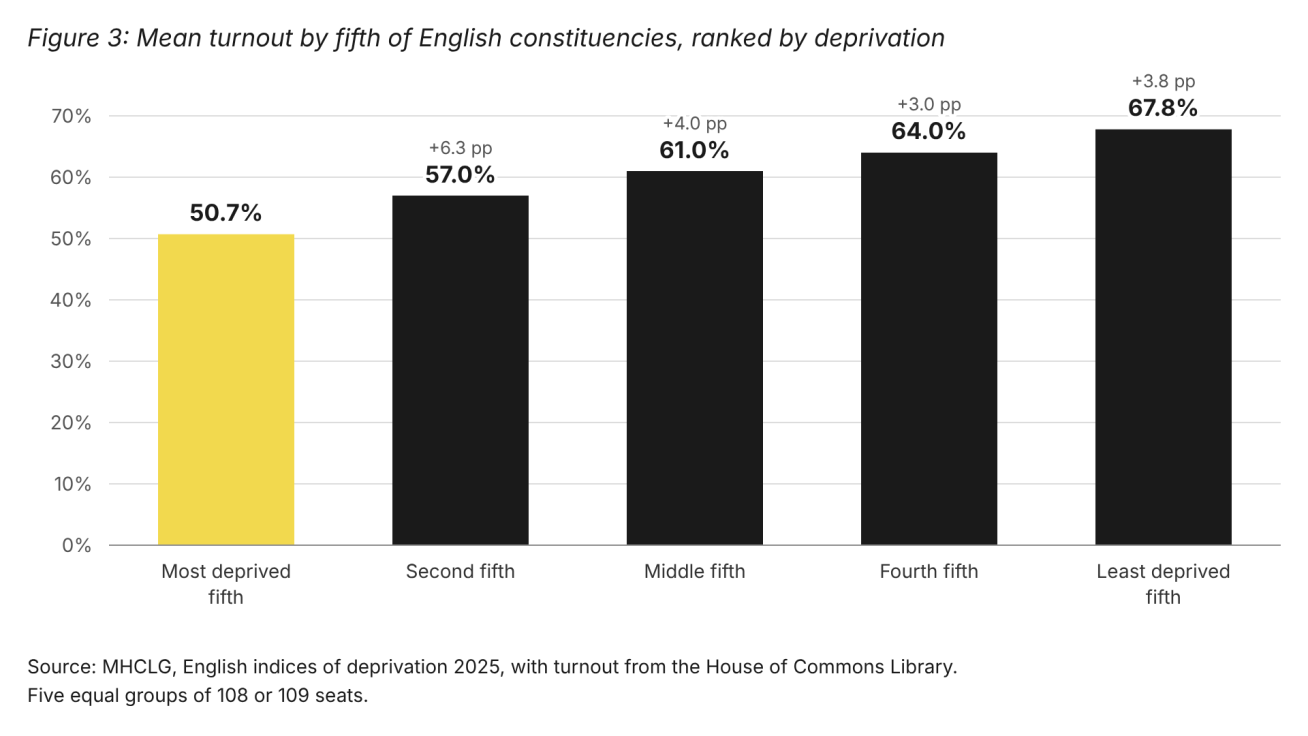
Child poverty rates statistically account for roughly 61% of the variation in turnout between constituencies, according to evidence cited in the new Fairness Foundation paper. Meanwhile, analysis of House of Commons library data found there was a 17.1 percentage point turnout gap between the least and most deprived fifth of English seats (67.8% against 50.7%).
Australians do not have to actually vote – they just have to put a ballot paper in the box. It can be blank, or spoiled. Australia reliably has turnout rates at elections of more than 90%.
Got a story? Get in touch in confidence on josiah@bylinetimes.com
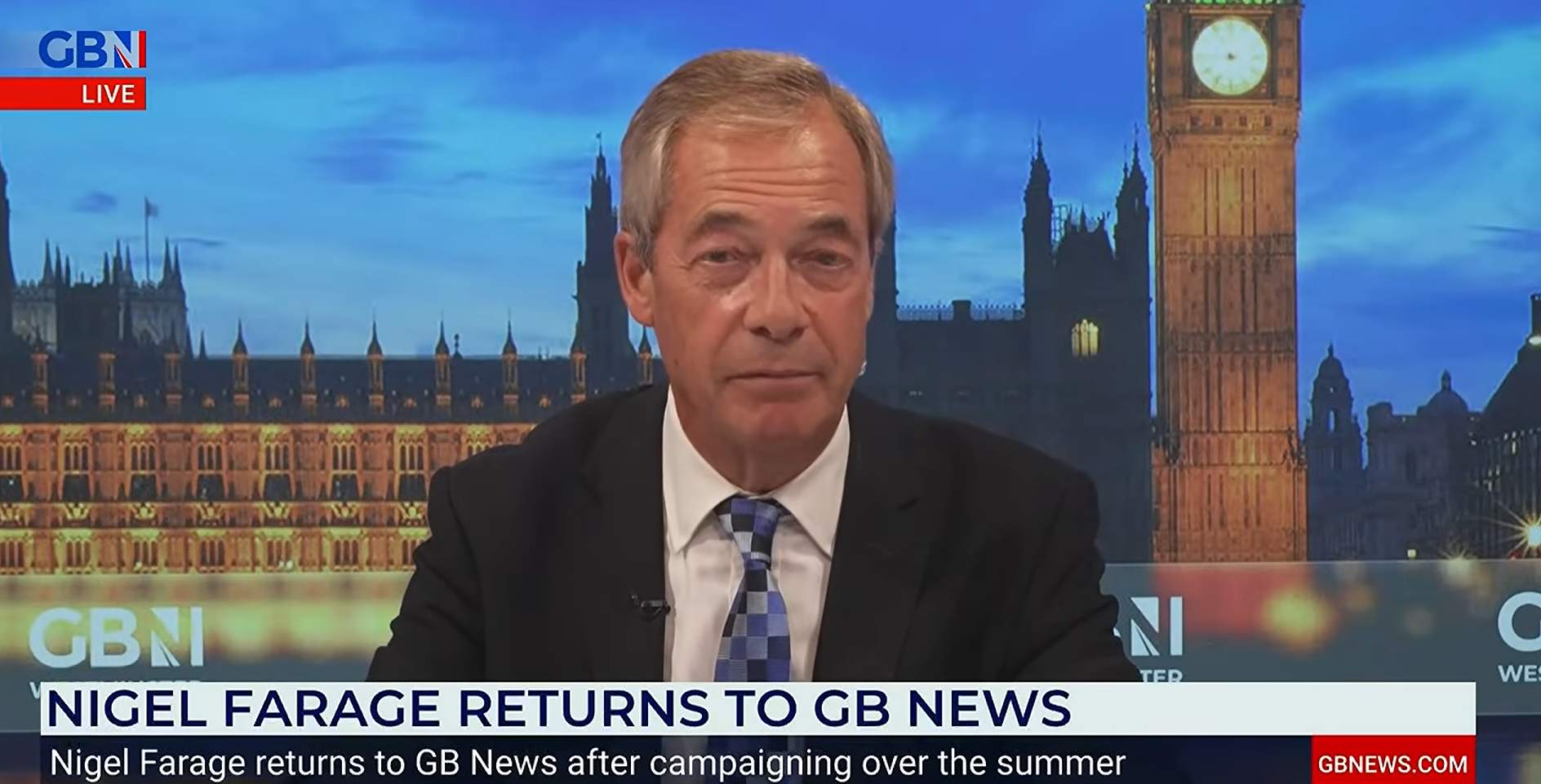
holding farage to account #reformUNCOVERED
While most the rest of the media seems to happy to give the handful of Reform MPs undue prominence, Byline Times is committed to tracking the activities of Nigel Farage’s party when actually in power

 Contribute to our #ReformUncovered crowdfunder
 Subscribers Get More from JOSIAH
 Subscribers Get More from JOSIAH
Josiah Mortimer also writes the On the Ground column, exclusive to the print edition of Byline Times.
So for more from him…
