
 Subscriptions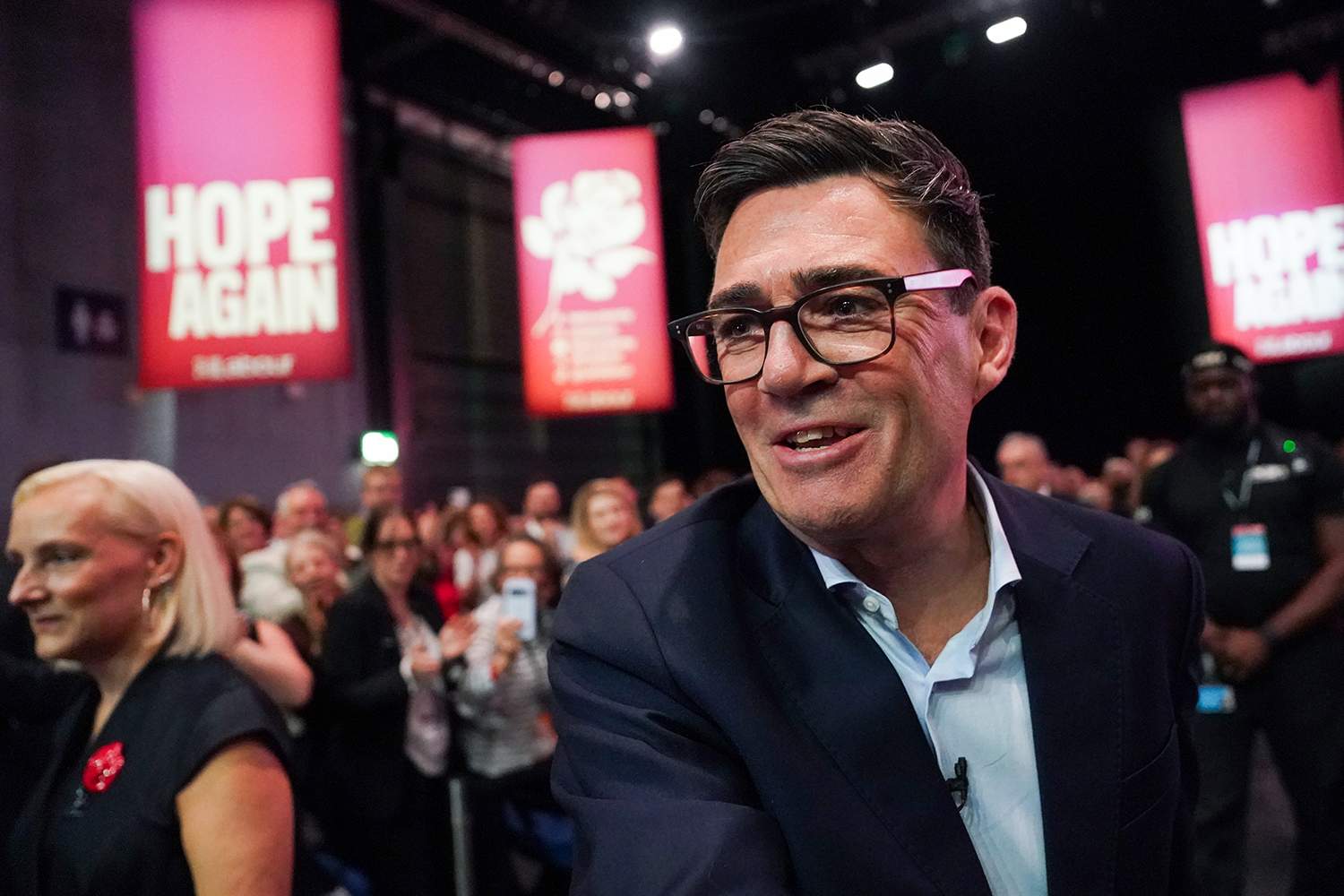
Read our Monthly Magazine
And support our mission to provide fearless stories about and outside the media system
The Prime Minister has announced a national commission to review Westminster’s First Past the Post voting system – and has promised to include an overhaul in Labour’s next manifesto.
Andy Burnham made the announcement in his leader’s speech at Labour Party Conference in Liverpool on Tuesday, 10 weeks after becoming Prime Minister.
Addressing party members, he said: “In past years, [Labour conference] has voted twice to support electoral reform. I hear you. I agree with you. And today I am announcing a new National Commission on Electoral Reform. I invite all the political parties to be part of its work.”
He added: “We will contest the next election with a manifesto commitment to change the electoral system so that everyone’s vote counts and everyone’s voice is heard.”
In a lobby briefing after Burnham’s speech, the Prime Minister’s spokesman told journalists: “The commission’s job is to look at the options properly, hear from all parties and the public, and make a recommendation.
“There may be questions around whether we are going to keep the constituency link. The Prime Minister believes the constituency link is critical.”
ENJOYING THIS ARTICLE? HELP US TO PRODUCE MORE
Receive the monthly Byline Times newspaper and help to support fearless, independent journalism that breaks stories, shapes the agenda and holds power to account.
We’re not funded by a billionaire oligarch or an offshore hedge-fund. We rely on our readers to fund our journalism. If you like what we do, please subscribe.
The Prime Minister’s official spokesperson restated this when asked by Byline Times about whether Burnham was ruling out ‘list’ versions of proportional representation – which aim to secure the most proportional results but which are often seen as removing the direct link between voters and a single constituency MP (there would be multiple local MPs elected from party lists).
It arguably leaves mixed-member PR systems, such as the one used for the Scottish Parliament, in play, which keep a constituency MP but have a regional ‘top up’ list of representatives elected to rebalance the results so that seats more closely match vote shares.
Asked why the Government would not simply adopt the ranked-choice ‘AV Plus’ system recommended by the Jenkins Commission in 1998, the spokesperson said the new body would “hear from all parties and the public”. He declined to say whether any change would require a referendum like the one held on the (non-proportional) Alternative Vote system in 2011.
Reform UK, which recently abandoned its backing for proportional representation, will be invited to join the commission alongside other parties.
The announcement has been hailed as a momentous moment by electoral reform campaigners.
Laura Parker of Labour for a New Democracy, which spearheaded much of the internal campaigning in recent years, said: “Our voting system is bust. The public knows it, an overwhelming majority across Labour know it, and now a Labour Prime Minister has committed to doing something about it.”
Years of Growing Pressure
The announcement follows years of growing pressure in the party.
Alex Sobel, the Labour MP who chairs the All-Party Parliamentary Group for Fair Elections, recently tabled an amendment to the Representation of the People Bill calling for a commission. It was backed by more than 180 MPs, which Make Votes Matter says makes it the most-supported amendment to any bill since the last general election.
“A National Commission can look at all the issues, consult the public, experts and civil society, and make independent recommendations for how general elections should be run in modern Britain,” Sobel said.
Don’t miss a story
YouGov polling of 100 MPs in July also found a majority of Labour MPs support a commission. A Survation poll for LabourList in August found two-thirds of party members backed one, with just 16% opposed. Former Labour leader Neil Kinnock also backed the idea in The Observer last month.
Public opinion has moved on the issue, with the latest British Social Attitudes survey finding 53% support Proportional Representation, up from 27% in 2011.
Backers of reform argue that First Past the Post can no longer cope with a five-party landscape. Figures compiled by Unlock Democracy show Labour and the Conservatives took an average of 93% of the vote between them in the 1950s, but just 57% in 2024. Labour won its 2024 landslide on 34% of the vote.
“At the last election, Labour won nearly two thirds of the seats on roughly a third of the vote,” said Mark Kieran, chief executive of Open Britain. “That gap tells us why the country needs to take a serious look at how votes become power.” Open Britain helped develop the plan for a national commission that formed part of the recent amendment to the Representation of the People Bill.

Keir Starmer Rejects Call for ‘Fairer Votes’ Despite MPs Voting in Favour of Proportional Representation
ARCHIVE: The Prime Minister blocked reform after the House of Commons voted in favour of a more representative voting system
Shaping the Commission
In recent weeks, supporters have signed petitions and open letters, contacted MPs and lobbied the Prime Minister. The group delivered messages to Downing Street calling on the Prime Minister to kick off a National Commission in his first 100 days in office.
Tom Brake, chief executive of Unlock Democracy and a former Liberal Democrat MP, said the current system “bakes in volatility and robs millions of voters of fair representation”. He added that an independent commission was the best way to turn electoral reform into “a lasting settlement that commands broad support”.
The details for any commission are so far scarce, but campaign group Open Britain wants the commission launched “as soon as possible” and given time to report before the next general election. The APPG for Fair Elections has already published draft terms of reference it wants to be used as a template.
Think tank Demos is calling for the remit of any commission to be broader than just Westminster’s voting system. The group’s chief executive Polly Curtis said Britain was in “a democratic emergency”. She added that PR in a five-party system was “obviously part” of the answer, but that compulsory voting and parliamentary reform should be considered as well. The commission “must involve major citizen deliberation to be truly legitimate,” Curtis said.
Longstanding Backer
Labour’s soft-left groupings have declared victory, with Compass director Neal Lawson noting that Burnham set out electoral reform at the campaign’s conference 18 months ago. Lawson said: “We are utterly vindicated.” The Burnham-backing Labour group Mainstream, whose founding statement Burnham signed, called the speech “radical realism in action”.
Make Votes Matter CEO Emma Harrison praised the speech as a “historic moment”.
“For years, our movement has been making this case to MPs and in communities up and down the country. Today’s announcement shows that it’s having an impact. Andy Burnham now has the opportunity to be remembered as the Prime Minister who changed British politics for good,” Harrison said.
Andy Burnham is a longstanding advocate for electoral reform. During a fringe at last year’s Labour Conference, he described Proportional Representation as “an idea whose time has come” and called for a National Commission on Electoral Reform to review the UK’s voting system.
In 2022, Labour members passed a motion at the party’s annual conference in support of Proportional Representation. However, the motion was dismissed at the time by Keir Starmer who said that electoral reform was “not a priority”.
Darren Hughes, chief executive of the Electoral Reform Society, said: “Bringing in a system of proportional representation would mean Parliament better reflects how the country voted by making sure seats match votes.
“This is not something new to the UK, as we have had proportional systems for decades in Scotland, Northern Ireland, Wales and London.”
However, the Green Party is demanding swifter action. Green MP Dr Ellie Chowns called for the recommendations of the commission to be implemented before the next General Election, not after it.
“The PM cannot acknowledge the unfairness of a system capable of handing power to a government with a minority of the vote share, and then say the answer is to let that happen exactly once more before he fixes it,” Chowns said in a statement.
Labour insiders however believe a fresh mandate is needed, with a clear manifesto pledge for proportional representation, to change Westminster’s voting system.
Got a story? Get in touch in confidence on josiah@bylinetimes.com
holding farage to account #reformUNCOVERED
While most the rest of the media seems to happy to give the handful of Reform MPs undue prominence, Byline Times is committed to tracking the activities of Nigel Farage’s party when actually in power


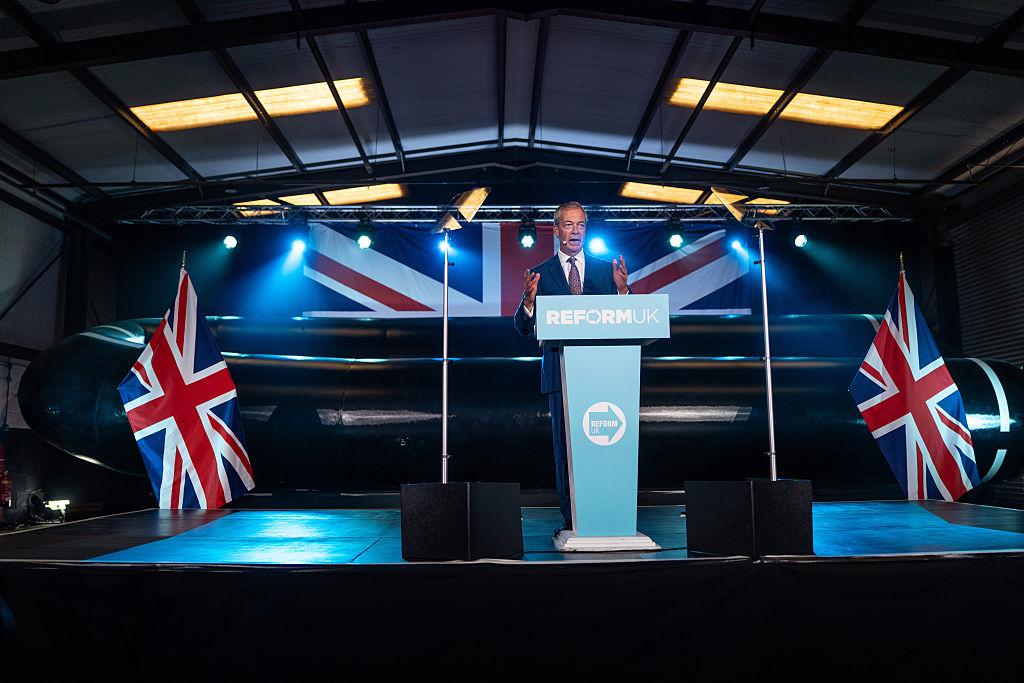


 Contribute to our #ReformUncovered crowdfunder
 Subscribers Get More from JOSIAH
 Subscribers Get More from JOSIAH
Josiah Mortimer also writes the On the Ground column, exclusive to the print edition of Byline Times.
So for more from him…
