Outside the system

UN Acknowledges ‘Conflicts’ of Interest After Byline Times Exposes AI Panel’s Ties to OpenAI and Anthropic Funders

The supposedly independent panel has close ties to donors who financed the AI giants they have assessed, a Byline Times investigation has found

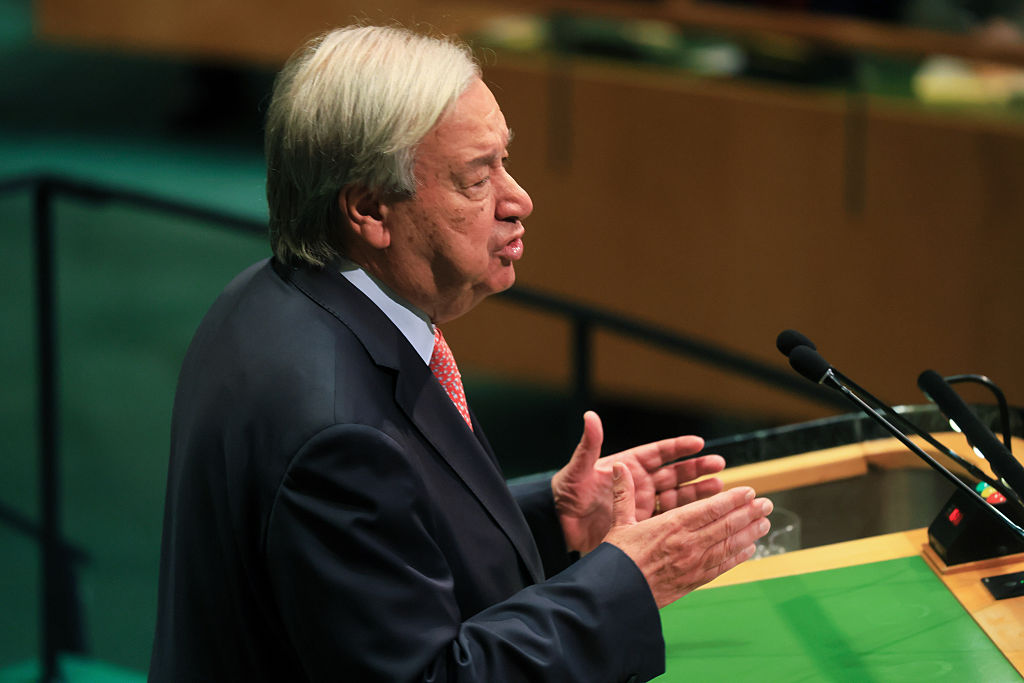
NEW YORK, NEW YORK - SEPTEMBER 22: United Nations Secretary-General António Guterres speaks during the 81st session of the United Nations (U.N.) General Assembly at U.N. Headquarters on September 22, 2026 in New York City. World leaders have gathered in New York for the annual session of the United Nations General Assembly, with this year's global issues ranging from the threat of artificial intelligence to the continued wars in Ukraine and Gaza. (Photo by Spencer Platt/Getty Images)

Read our Monthly Magazine

And support our mission to provide fearless stories about and outside the media system

The United Nation’s “Independent” AI Panel warning governments about the dangers of advanced artificial intelligence has financial and personnel ties to OpenAI and Anthropic – the frontier AI companies building the technology the panel was created to assess – a Byline Times investigation has established.

In response to this publication’s enquiries, the UN has disclosed that measures including recusal from specific discussions were agreed after an assessment of the conflicts of interest.

The UN AI panel’s latest briefing largely echoes the warnings in recent weeks from frontier AI firms, warning that the “safeguards designed today” may fail “once agents can understand them and plan around them. In simple terms, the traditional model of safeguarding is unravelling.” 

However, a Byline Times investigation has revealed that the panel has extensive ties to the very companies it is assessing. Its co-chair, Yoshua Bengio, advised OpenAI at its launch and now leads LawZero, an AI organisation supported by funders of OpenAI and Anthropic. 

Kevin Kohler, one of the writers of the panel’s July preliminary report, simultaneously worked full-time for a think tank funded by the same philanthropic network that built both frontier AI giants – an affiliation omitted from the report’s credits.

“Each declaration was assessed for possible or actual conflicts, and mitigation measures, including recusal from specific discussions, were agreed,” states an FAQ published on the panel’s website, which was updated in response to Byline Times’ inquiries.

The answer does not identify the interests concerned, or name the members who agreed to stand aside from particular discussions.

“We have published answers to many of the questions you raised on the Panel’s website,” a spokesperson for the UN Office for Digital and Emerging Technologies, told Byline Times.

These potential conflicts of interest reach into the panel’s latest assessment, published on 21 September. Examining an incident involving OpenAI and Hugging Face, the brief warns about the risk of losing human control over AI. It draws on Bengio’s own work and discusses research from his organisation, LawZero.

Help Byline Times Fund aN URGENT New INVESTIGATIVE SERIES

The 40-member Independent International Scientific Panel on Artificial Intelligence was appointed by the UN General Assembly in February to assess AI’s opportunities, risks and impacts. Bengio co-chairs it alongside Nobel Peace Prize-winning journalist Maria Ressa. Its findings are intended to inform how governments worldwide govern the technology.

The potential conflicts also extend to the panel’s creation. The Simon Institute for Longterm Governance, which employed Kevin Kohler during his report drafting assignment, helped shape the negotiations over the panel’s design.

Open Philanthropy, which funded OpenAI and supports Yoshua Bengio’s LawZero through its successor Coefficient Giving, also financed the expansion of effective altruism and longtermism, which have intellectual roots in eugenics – the pursuit of supposedly superior human populations through selective reproduction. The same philanthropic network helped finance AI developers and organisations warning of their technology’s dangers, and now supports organisations employing people responsible for the UN’s independent assessments.

Neither the UN AI panel’s September brief nor its July preliminary report publishes individual declarations of interest or records of members standing aside from decisions because of a conflict. 


The Undisclosed Effective Altruism Conflict

One of the writers of the UN AI panel’s July report was simultaneously employed full-time by a think tank that had helped shape the panel itself.

Kevin Kohler’s CV records a UN University consultancy in scientific editing and drafting from April to July 2026. Yet throughout those months, he was also a senior technology policy specialist at the Simon Institute for Longterm Governance. While the July report credits his drafting work, it identifies his affiliation only as UN University.

The UN’s new FAQ places responsibility for selecting and supervising reports drafters and editors with the panel itself, which selects them through a merit-based process from candidates nominated and approved by members. UN University administered their contracts.

That response does not address the omission of Kohler’s concurrent Simon Institute employment from the report’s credits.

The Simon Institute has direct roots in effective altruism. Its co-founder and chief executive, Max Stauffer, previously co-founded Effective Altruism Geneva and directed its research.

Kohler’s work on the panel began before his drafting assignment. His CV says he supported the General Assembly negotiations that established the panel and its accompanying Global Dialogue on AI Governance, a forum for governments to discuss AI policy. The Simon Institute’s annual report also confirms its involvement in the panel’s design through diplomatic workshops, consultations and recommendations, crediting Kohler.

The institute also worked with Mila, the Canadian AI institute founded by the panel’s eventual co-chair, Yoshua Bengio. Its annual report records a joint event in July 2025 with the UK Department for Science, Innovation and Technology.
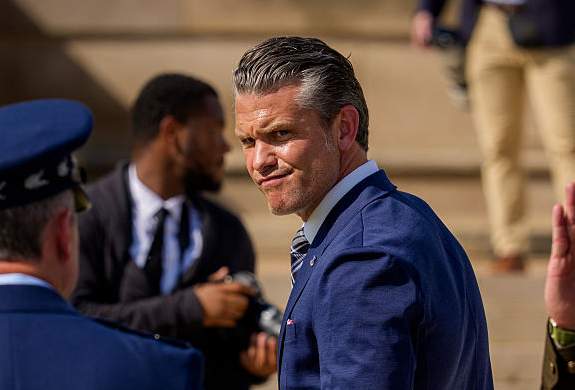
‘Almost Started A War’: Trump Administration’s AI Policies Are Hurtling Towards Catastrophe

The same technology marketed as the only way to defend the US from China militarily may be the very thing that starts a war with them in the first place, reports Caroline Orr Bueno


The Money Behind the AI Firms and Their Assessors

Both Kohler’s employer and Bengio’s organisation receive support from an interlocking philanthropic network that also helped finance OpenAI.

At its centre are Good Ventures, established by Facebook co-founder Dustin Moskovitz and Cari Tuna, and its philanthropic adviser Coefficient Giving, formerly Open Philanthropy. The latter grew out of a partnership between Good Ventures and the charity evaluator GiveWell.

The Simon Institute’s accounts record approximately $1.6 million from Good Ventures in 2024 and $92,000 from Open Philanthropy in 2025. Coefficient Giving is also a named backer of LawZero, where Bengio serves as co-president and scientific director.

Before supporting these organisations, Open Philanthropy gave $30 million to OpenAI. That grant also secured a role in the company’s governance: Open Philanthropy co-founder Holden Karnofsky has said that a board seat and participation in OpenAI’s early decision-making formed part of the arrangement.

Bengio himself had already been named as an advisor in OpenAI’s December 2015 launch announcement, which listed Sam Altman and Elon Musk as co-chairs and Peter Thiel among its financial backers.

Karnofsky is also married to Anthropic president Daniela Amodei, who co-founded the firm with her brother Dario. 

Bengio’s LawZero has another donor who helped finance the companies the panel assesses: Skype co-founder Jaan Tallinn. He led Anthropic’s $124 million first round in 2021, alongside investors including Moskovitz, and participated in Anthropic’s $580 million second round in 2022, led by convicted crypto-fraudster Sam Bankman-Fried.

Previously an investor director of DeepMind, Tallin co-founded the Future of Life Institute (FLI), which also funds LawZero. FLI itself had separately received early funding from OpenAI funder, Open Philanthropy, of $1.9 million.


The Ideas Behind the Funding

Open Philanthropy’s funding also connects the AI companies to the thinkers who shaped their founders’ concerns about existential risk. One recipient was the Machine Intelligence Research Institute (MIRI), which received a three-year $3.75 million grant in 2017.

Its co-founder, AI theorist Eliezer Yudkowsky, helped popularise the argument that advanced AI could threaten humanity’s survival. In a recent interview, he said: “if sacrificing all of humanity were the only way, and a reliable way, to get … god-like things out there – superintelligences who still care about each other, who are still aware of the world and having fun – I would ultimately make that trade-off.”

Sam Altman later wrote that Yudkowsky “was critical in the decision to start OpenAI”.

Former co-lead of Google’s Ethical AI team Timnit Gebru and philosopher Émile P. Torres who was a former ‘longtermist’ trace the roots of effective altruism and longtermism through this transhumanist tradition – the ambition to transcend human biological limits through technology – to the eugenics movements of the 20th Century.

Open Philanthropy also paid to expand the movements promoting these priorities. Its 2022 review offers to support effective altruism community growth with a focus on longtermism.

One organisation carrying out that work is 80,000 Hours, a tech careers charity that describes itself as a major driver of effective altruism’s growth. It names Coefficient Giving as its largest donor and also lists Jaan Tallinn, who funds LawZero.

In a May interview, Bengio used the charity’s platform to discuss Scientist AI and opportunities to work at LawZero. 

LawZero’s other backers bring further direct connections to the AI industry. The Gates Foundation is working directly with OpenAI: in January, they announced a joint $50 million commitment in funding, technology and technical support to expand AI use in African primary healthcare.

Schmidt Sciences was founded by former Google chief executive Eric Schmidt and his wife Wendy.

Nvidia, the chipmaker supplying the AI industry, supports Bengio’s organisation. In July, LawZero announced that Nvidia had donated computing resources to train and evaluate Scientist AI.


Panel Members Inside the Industry

Beyond that shared history, four panel members hold live positions inside companies building or financing the technology they were appointed to assess. 

Yutaka Matsuo, a University of Tokyo professor, has been an external director of SoftBank Group since June 2019. In February, SoftBank announced a further investment of $30 billion in OpenAI, on top of the $34.6 billion it had already invested, subject to closing conditions.

Joëlle Barral is a senior director of research and engineering at Google DeepMind, with responsibility for work including frontier models – the most advanced AI systems. 

Adji Bousso Dieng combines her position at Princeton University with a research scientist role at Google AI. 

And Girmaw Abebe Tadesse is a principal research science manager at Microsoft, working in its AI for Good laboratory.


Disclosure and Independence?

The UN AI panel’s September brief relies heavily on an investigation of the OpenAI-Hugging Face incident by Model Evaluation and Threat Research (METR), frequently depicted by AI frontier firms as an independent third-party auditor.

Former OpenAI safety engineer Dr Heidy Khlaaf, currently chief scientist at the AI Now Institute in New York, has criticised METR for being “ideologically and financially tied” to the AI firms it audits, and for using “unscientific means such as ‘CoT’” (using AI models to analyse the step-by-step reasoning used by AI, despite the risk of the same models fabricating information).

METR’s founder and chief executive, Beth Barnes, is a scientific advisor to Bengio’s organisation, LawZero.

The UN spokesperson did not explain how that relationship was managed when selecting and assessing the evidence.

The UN’s FAQ, updated on 24 September, says candidates’ declarations covered appointments, employment and consulting, research support, investments, intellectual property, public positions and non-financial interests. Members are required to disclose conflicts on an ongoing basis.

These answers, however, failed to disclose the individual declarations or explain how the relationships identified by Byline Times were assessed. They also do not establish whether the agreed recusals were implemented during preparation of the July report or September brief.

The FAQ describes the panel report and briefing findings as reflecting the cited evidence and the collective judgement of its 40 members, who hold a wide range of views on AI. It does not explain whether there were any agreed recusals concerning Bengio’s research, LawZero or METR.

The UN spokesperson told Byline Times that members served in their personal capacity, did not represent governments, employers or other organisations, and did not take instructions from any source. All members had completed a Declaration of Interests before appointment, they said, and must update it whenever their circumstances change.

While the UN secretariat provided logistical, administrative and other support requested by the panel, the spokesperson clarified, it did not direct the scientific work, and the panel’s findings were not subject to UN review or approval.

“Questions about individual members’ own work, funding or affiliations are for them to answer,” the spokesperson added. “The Co-Chairs’ affiliations are listed on the Panel’s website. The Secretariat is not in a position to answer on their behalf.”


Written by

This article was filed under
,