
 Subscriptions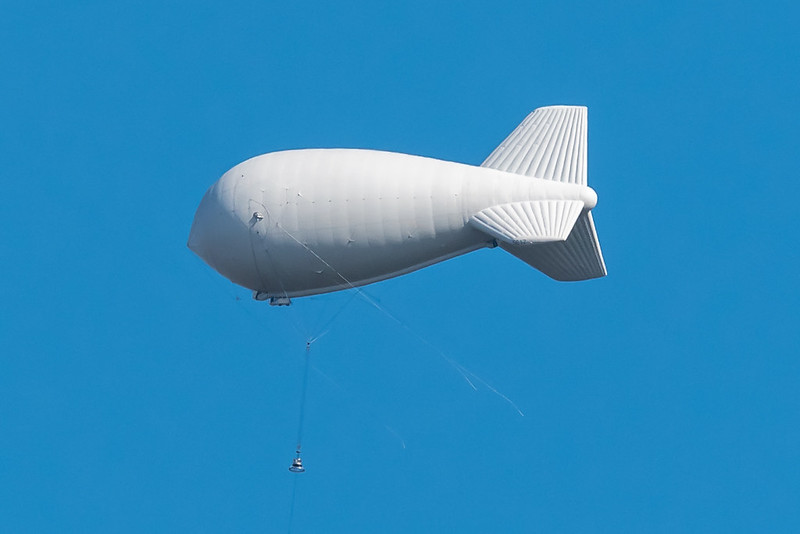

Read our Monthly Magazine
And support our mission to provide fearless stories about and outside the media system
Britain’s sole emergency communications link for sending nuclear retaliation orders to Trident missile submarines has been destroyed in a spectacular disaster unwittingly observed by hundreds of Yorkshire residents and passers-by. During a trial on Friday, the system was seen and filmed breaking up over Topcliffe, north of York, in clear view of travellers on the nearby A1 motorway.
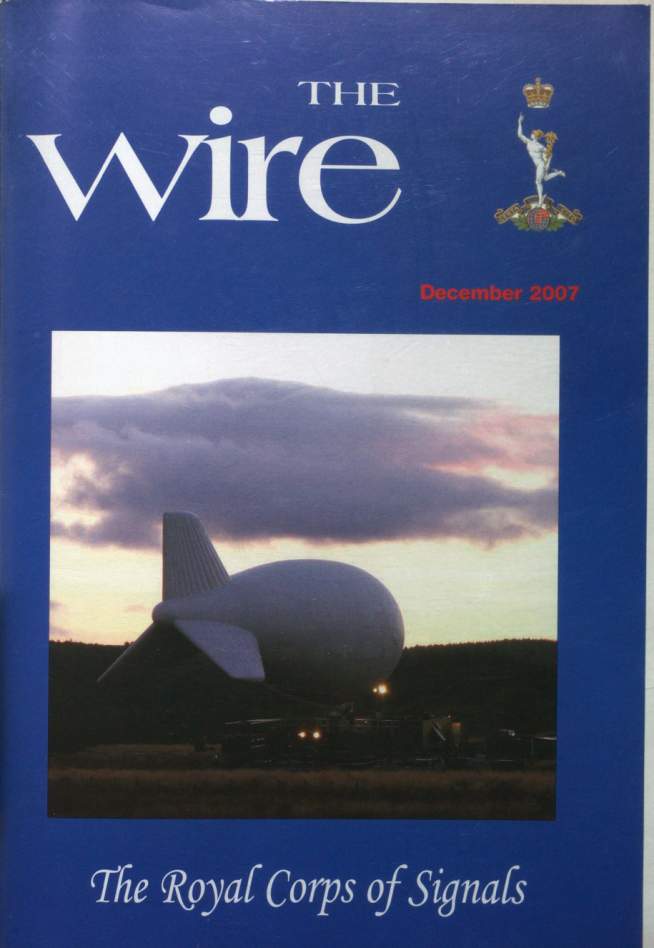
The emergency system, called Low Frequency Fall Back or LFFB and codenamed SUNFLOWER, used a “blimp” style tethered balloon or aerostat (illustrated) to lift a 1,500 metre long radio antenna.
According to publicly available Army journals, Low Frequency Fall Back “was brought into service in 2003 to provide a high-powered LF radio system designed to operate through the atmospherically harsh conditions of a post-nuclear strike against the UK.”
While being flown on Friday, the balloon was observed suddenly to start deflating, triggering the catastrophic destruction sequence seen below. The Ministry of Defence refused to answer a question from Byline Times as to whether hostile power “hybrid warfare” is suspected of bringing down the balloon. A spokesperson also refused to say whether debris has been recovered, or whether service personnel or others have been injured.
The Balloon Goes Up
On Friday 4 September, strong gusty winds reported to exceed 50 miles an hour affected parts of the Pennines and Yorkshire, bringing down a tree in one area. Despite the weather news, the balloon was launched. Disaster struck at about 2.30 pm. A succession of images and videos posted to social media show its destruction in graphic detail (see panel). Members of an active Facebook group, North Yorkshire Weather Updates, posted notes and video records.
As multiple watchers’ cameras panned and zoomed in, showing wind pressure, the balloon and tail fins appeared partially deflated, implying that its skin and gas balloon had been ruptured. The balloon began to spin on its tether, almost plunging into the ground in one image. Then the tether, which was also the emergency radio antenna, snapped. At first, the top part of the aerial, called a corona ring, remained attached. Then it appears to have fallen off.
About half an hour later, around 3 pm, the balloon was photographed still spinning and inflated while rapidly ascending over Thirsk. Over the next four hours, it appears to have continued to climb while being blown 12 miles east, finally exploding at an unknown high altitude over the edge of the North York Moors. Another Facebook user recorded the balloon wreckage falling into a farmer’s field near Ampleforth.

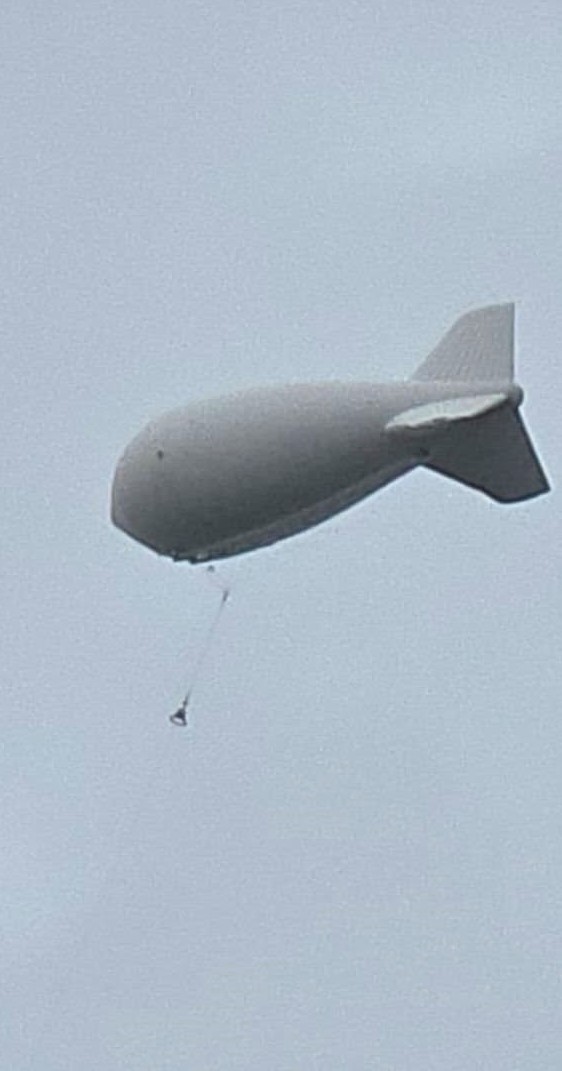
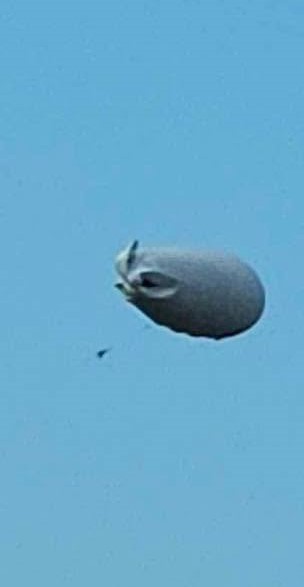
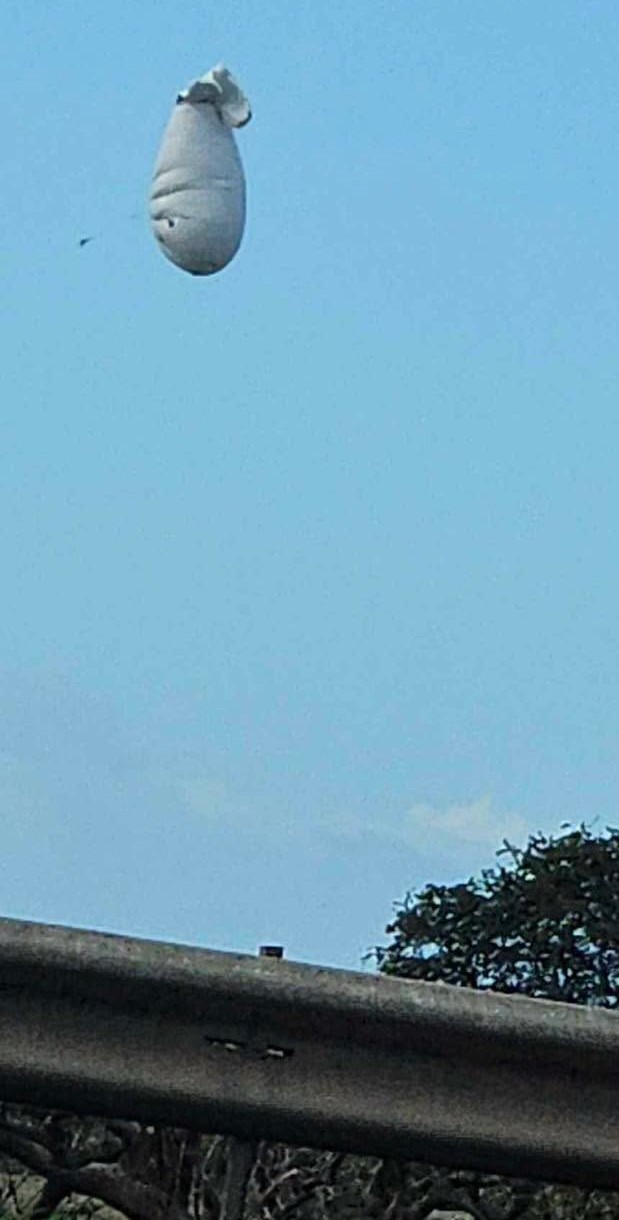
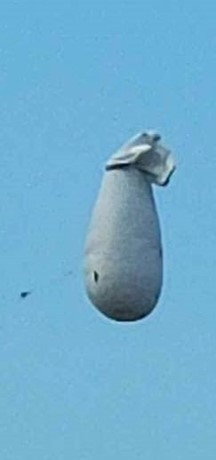
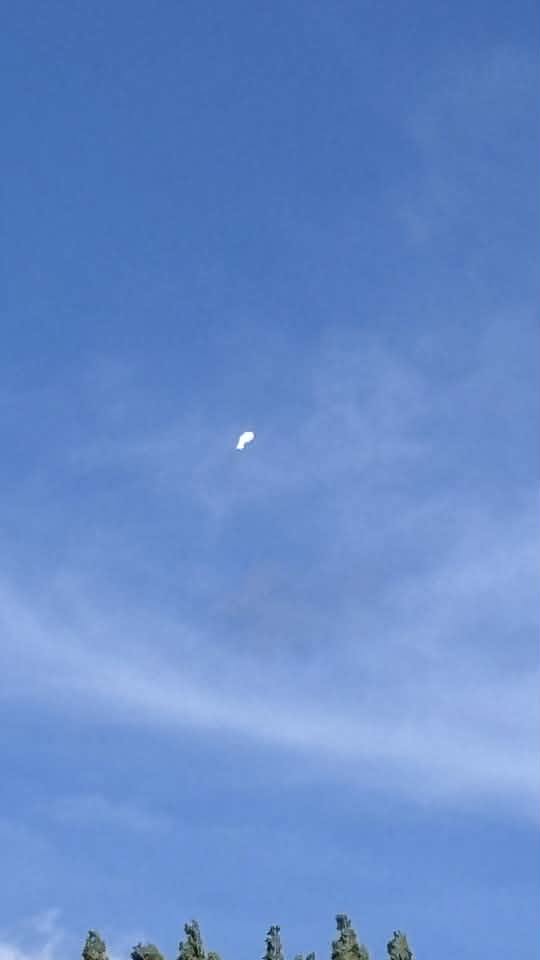
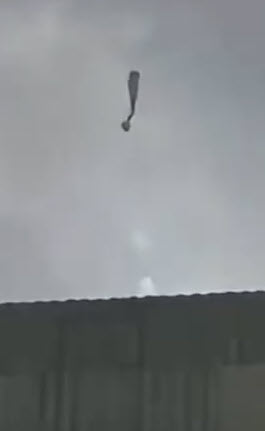
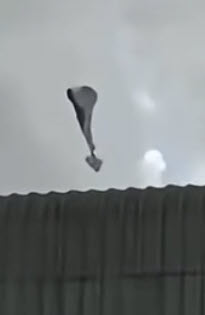
After apparent puncturing, images show the balloon drifting east until the wreckage fell near Ampleforth (Facebook North Yorkshire Weather Updates group)
Available video does not show what caused the balloon to start deflating at about 2 pm on Friday. Its sudden destruction comes at the end of the week that NATO, Germany and the UK accused Russia of explosive drone attacks on Leipzig airport, and the UK Cabinet announced restarting Britain’s “war book” emergency plans, previously abandoned in 2004.
According to a source with direct knowledge of Trident launch control procedures, speaking off the record, national fire control messages are sent by the Cabinet Office and naval headquarters twice a week, using VLF (very low frequency) radio, and following a two-person rule throughout. At the receiving end, only the submarine’s weapons officer and their deputy are then permitted to open the safe containing decoding equipment and firing keys. If any other crew or the captain were to attempt to open the safe, marine guards are posted to disable them using baseball bats.
“The balloon would only be needed if all other failsafes have broken or been destroyed”, the source added. “Testing is to find the weak link in rehearsal – not on the day of the crisis.”
The primary Cabinet Office and naval nuclear command centre, Codenamed Pindar, was built during the 1980s under the south end of the Ministry of Defence building in Whitehall. It is linked to 10 Downing Street and other government departments by a deep-level tunnel under Whitehall. The “nuclear release” room in PINDAR is connected to two permanent VLF transmitters near Carlisle, whose signals reach underwater.
The Seeds of Sunflower
SUNFLOWER was ordered from US contractor Lockheed Martin in 1999 to provide an additional emergency submarine link to order retaliation after Britain had been destroyed by nuclear weapons. If, as expected, London and major military sites were targeted at the start of a nuclear war, SUNFLOWER’s role has been to take over and enable any surviving successor Prime Minister to pass attack orders directly to submerged missile submarine commanders.
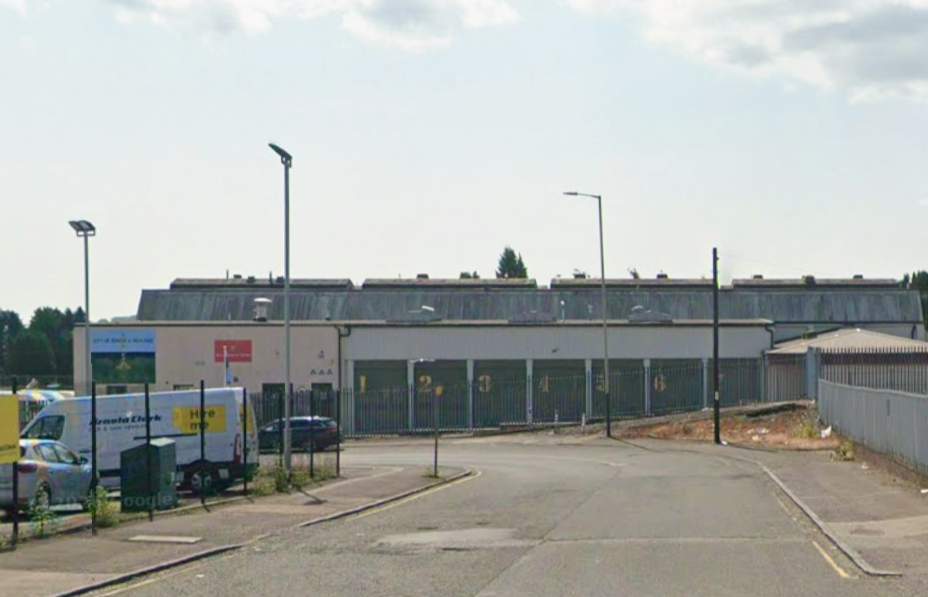
Until this week, official plans in a military emergency and if nuclear war seemed possible, would instruct a secret convoy of trucks and specially equipped vehicles to leave from an army warehouse discreetly located in a Dundee industrial estate, with orders to head for the hills. The convoy would then hide as far as possible away from cities and other likely UK nuclear targets. When and if any surviving post-nuclear attack British government decided to order retaliation on Moscow, their order would go through to the balloon unit to send pre-arranged LF messages, capable of being received underwater.
In a ritual now familiar to residents of the Yorkshire market town of Thirsk, every September the convoy from Dundee has rolled onto the nearby former airfield at Topcliffe to conduct a nuclear war test drill. The Scottish soldiers taking part are mainly part-time members from a Territorial Army unit called 2 (City of Dundee and Highland) Signal Squadron (Volunteers).
They erect security fencing and inflate the aerostat balloon with helium gas, ready to fly when and if ordered. Once aloft, simulated nuclear attack orders are sent to a Trident deterrent patrol boat submerged in the North Atlantic. One test reportedly connected to the US Navy headquarters to pass on orders, according to an Army magazine report.
The Topcliffe event is a Top Secret UK Eyes Only and ultra-sensitive annual rehearsal for the last days of Britain, as depicted most graphically in the 1984 BBC drama Threads.
Once this balloon went up, if for real, former officials anticipated that signals from SUNFLOWER would be the last military event before Britain’s rapid fall into a violent struggle for survival and then a decline to pre-medieval living standards and population levels in near-starvation conditions.
Ahead of each annual war rehearsal and balloon relay exercise, the Ministry of Defence publishes a “Notice to Airmen” (NOTAM) banning all aviation activity below the height of 1,800 metres (6,000 feet) within three nautical miles of Topcliffe.
Thirsk locals have become used to then seeing the balloon appear over their town about the same time as kids go back to school every year, and to then exchanging speculation about its real purpose. Residents usually guess, wrongly, that it is a “weather balloon”.
This September began as usual. Scottish squaddies set up their balloon camp. When the balloon was inflated on Tuesday, local social media woke up. Locals passing on the A168 trunk road took and posted images to social media, showing the inflated balloon made ready on the ground. A local businessperson reported he had been asked to deliver diesel “on the bounce, they’re Scottish, and there are lots of big computers in several trucks, wouldn’t even give me a clue as to what they were doing”.
Although SUNFLOWER might have been assumed to be one of Britain’s most vital and precious national security secrets, details of the system have for years been as visible as its sudden demise high in Yorkshire skies.
The basic LFFB design was patented in 1984. Full details of the system, including its power design and technology, were published in a 1993 NATO conference paper. Details of the acquisition, deployment, testing, exercising and nuclear role of the now-shredded balloon have routinely been published and described in open Army publications, notably the Royal Signals Corps magazine Wire. Wire featured the balloon with cover pinup prominence in its December 2007 edition (illustration).
After a decade of LFFB operations, in 2014 the Royal Signals Institute awarded a Silver Medal to Dundee Staff Sergeant George Cowan, citing an “unsurpassed… contribution to the operational effectiveness of the LFFB and for developing a unique unproven civilian system into a deployable military system … whilst assuring its credibility within the Nuclear Firing Chain. Sgt Cowan was also commended for having a “the message must get through” attitude in the face of possible national nuclear destruction.
The citation also revealed that, despite the lifetime cost of Trident estimated by the House of Commons at £21 billion, with annual running costs of £3 billion, the former emergency war link was apparently being maintained on a shoestring. Sgt Cowan’s citation stated that he was the only person in Britain capable of getting a nuclear retaliation order sent out, as “he has been the solitary Flight Control Officer capable of flying the system for over eight years.”
Despite the obvious security sensitivity of the Flight Control Officer’s job, Cowan’s official mobile phone number was published in warning notices for each exercise. The current NOTAM warning for Topcliffe, available on the web at the time of publication, provides mobile phone numbers for SUNFLOWER’s current flight controllers.
The apparently unusual decision to allocate the nation’s most vital last-resort military mission to a Scottish reserve unit based in a Dundee industrial estate was historically the result of second world operations by MI6, the Secret Intelligence Service. A secret agent radio control station to connect to Northern Europe was constructed near Forfar, 13 miles from Dundee.
When the Cold War began, the Forfar station was revived to allow MI6 to connect to agents inside Warsaw Pact countries, and was staffed by reserve soldiers. According to Army publications and Wikipedia, the unit modernised in 1988 and moved to a renovated commercial warehouse bordering the city’s Eastern Cemetery. Its first role was to provide a “special communications” wartime message relay system for MI6. In 1996, it was reassigned to provide the last resort for Trident.
With a United States President increasingly unstable and hostile to the UK, the only obvious trustworthy military replacement for SUNFLOWER that could be available might be its French equivalent, Système de transmission de derniers recours (SYDEREC).
Unlike SUNFLOWER, SYDEREC has at least two balloons, both working and currently being updated, and two aerostat teams based in widely different locations. Operating plans for the French and British systems are closely aligned.
The French president would give nuclear firing orders from the Jupiter Command Post, said to be located 80 metres below the Élysée Palace in Paris. If all other communications links are destroyed, according to French official documents, SYDEREC would use ‘antennas supported by inflatable balloons, carried by mobile vehicles’ to relay orders.
In a grimly coincidental look into a dangerous nuclear future, a new French feature film “Jupiter” premiered in Venice, also on Friday. The action is mainly set inside the Paris underground command post, codenamed JUPITER. The fictional French president faces down a Russian demonstration nuclear attack involving Ukraine, and contemplates a response “backed in his mission by the British prime minister.”
Until last Friday, if the VLF stations were destroyed by attacks with advanced conventional weapons, the balloon could have gone up to provide a national emergency link. The situation now has parallels to warnings written forty years ago by civil service planners advising Mrs Thatcher’s successor what to do if all links were destroyed: “This is not a situation easily provided for, but the argument is that if we do not provide for it – and should the Russians discover the fact – we do not have a deterrent which is credible in all circumstances.”
Additional research by Matthew Fowler and Mike Kenner. Duncan Campbell and Mike Kenner are currently writing a book on British nuclear war and civil defence planning since the start of the Cold War, following up Campbell’s previous text War Plan UK (still in print and e-book).