

Read Our Monthly Magazine
And support our mission to provide fearless stories about and outside the media system
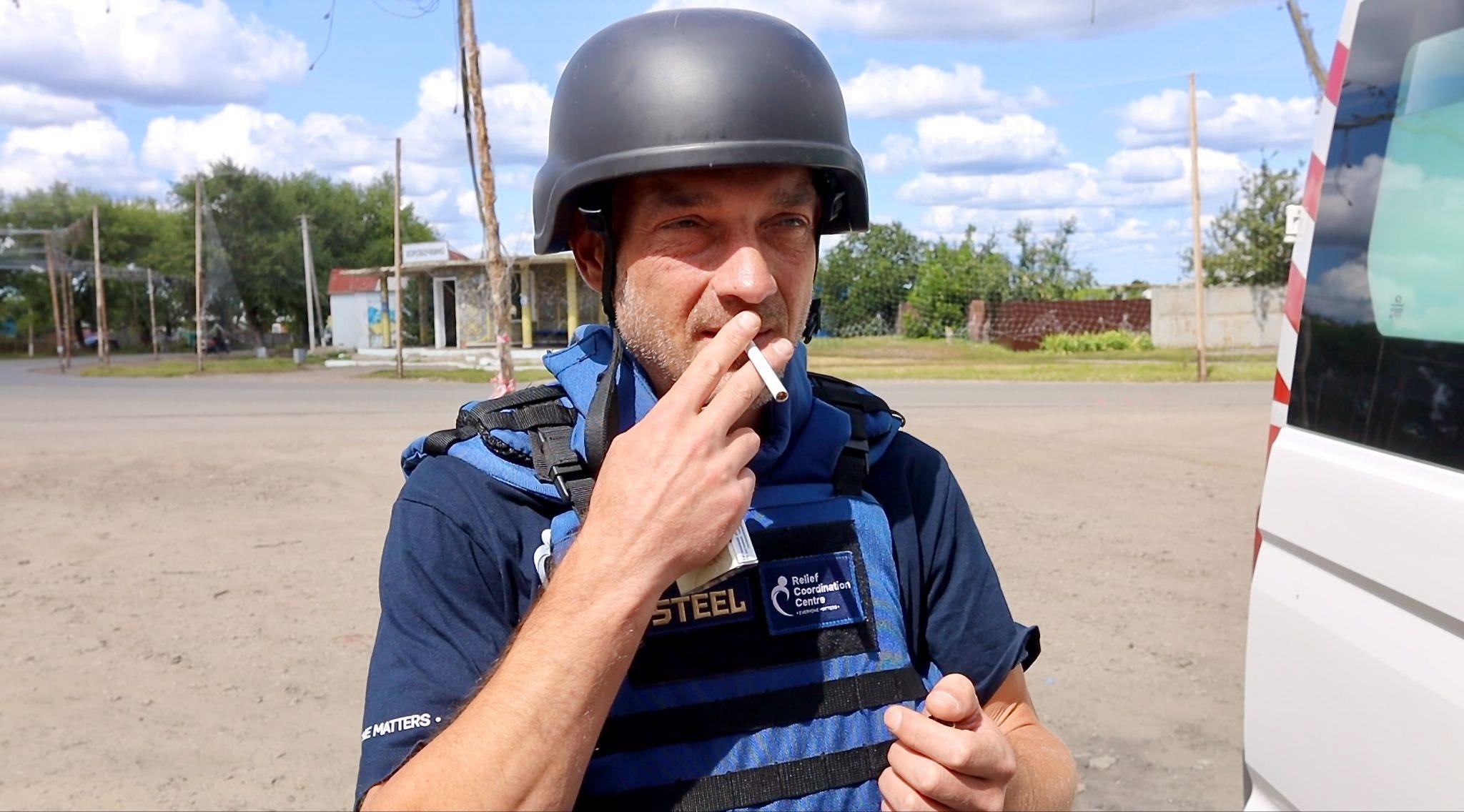
The black van speeds along at 130 km/h on a road lined with sunflower fields. Behind the wheel of the ambulance, Andrey, a volunteer with the Relief organisation, keeps his eyes fixed on the road. Next to him, Sacha, a former soldier who has since switched to evacuating civilians, scans the sky, phone in hand.
A message has just popped up on a military app: a Russian reconnaissance drone has been spotted within a radius of two to five kilometres. “So far, so good,” he says, without taking his eyes off the screen. “The biggest danger comes from the drones we call ‘lookouts,’” Sacha explains. “They can lie in ambush along the roadside. You can’t spot them until they’re right up close and charging at us.”
‘It Doesn’t Matter if it’s an Ambulance or a Military Vehicle’
For these teams, the danger is very real. On February 4, a team of volunteers was targeted by a fibre-optic drone, followed by artillery fire, this time in the town of Berislav, in the Kherson region. Several civilians were seriously injured during that evacuation. A volunteer police officer filmed the scene with his GoPro camera.
“To the Russians, an ambulance and a military vehicle are one and the same.” Andrey sums up without taking his eyes off the road. “If they see a vehicle, they destroy it,” he continues, gripping the steering wheel nervously as Sacha recalls a previous evacuation. “We heard the sound of the drones. We quickly got out of the car and hid in the bushes,” he says. “We could hear a buzzing sound, but the drone didn’t see us. It was frightening,” he says.
This is how the evacuation of the last civilians from the front-line zone has been proceeding for months. Inexpensive and easy to fly, FPV (first-person view) drones are now swarming this 30-kilometre-deep strip along the front line, which residents and soldiers have come to call the “kill zone”.
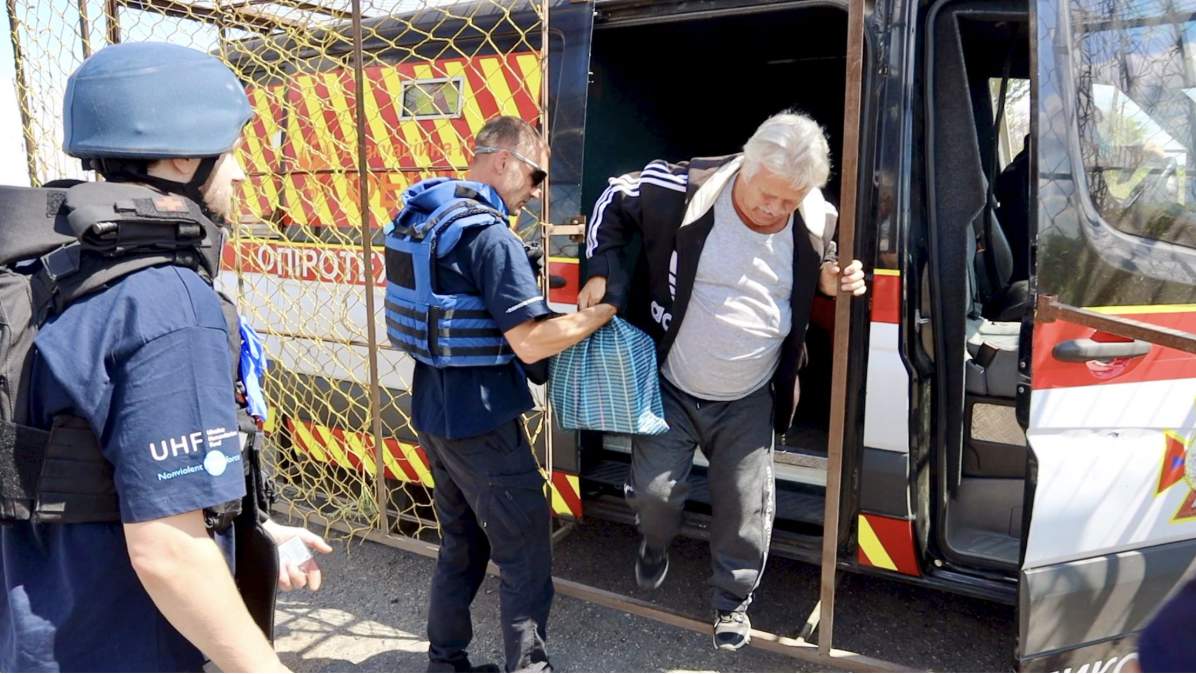
The ambulance brakes suddenly. Three villagers come out of their homes and get in, helped by the volunteers. “Thank you! Thank you so much, my angels,” exclaims one of village residents. In the back of the armoured vehicle are three civilians who have just left Borova, about 5 km from the front line, located right in the heart of the combat zone. In just a few minutes, they were evacuated from the area, taking with them three meagrely filled shopping bags.
‘Drones Were Flying Around Like Bees’
During the journey to evacuate these civilians to safe areas, Halyna Mykolaïvna, born in 1965, opens up. She clutches her bag tightly. She describes what she left behind. Her house “is still standing for now.” In her neighbourhood, other houses have already been destroyed, and neighbours have died. “It’s very scary,” she says. Looking haggard, she scans the passing landscape, as if to verify that the danger has truly disappeared.
“Drones were constantly flying over the area. They’re destroying every