
 Subscriptions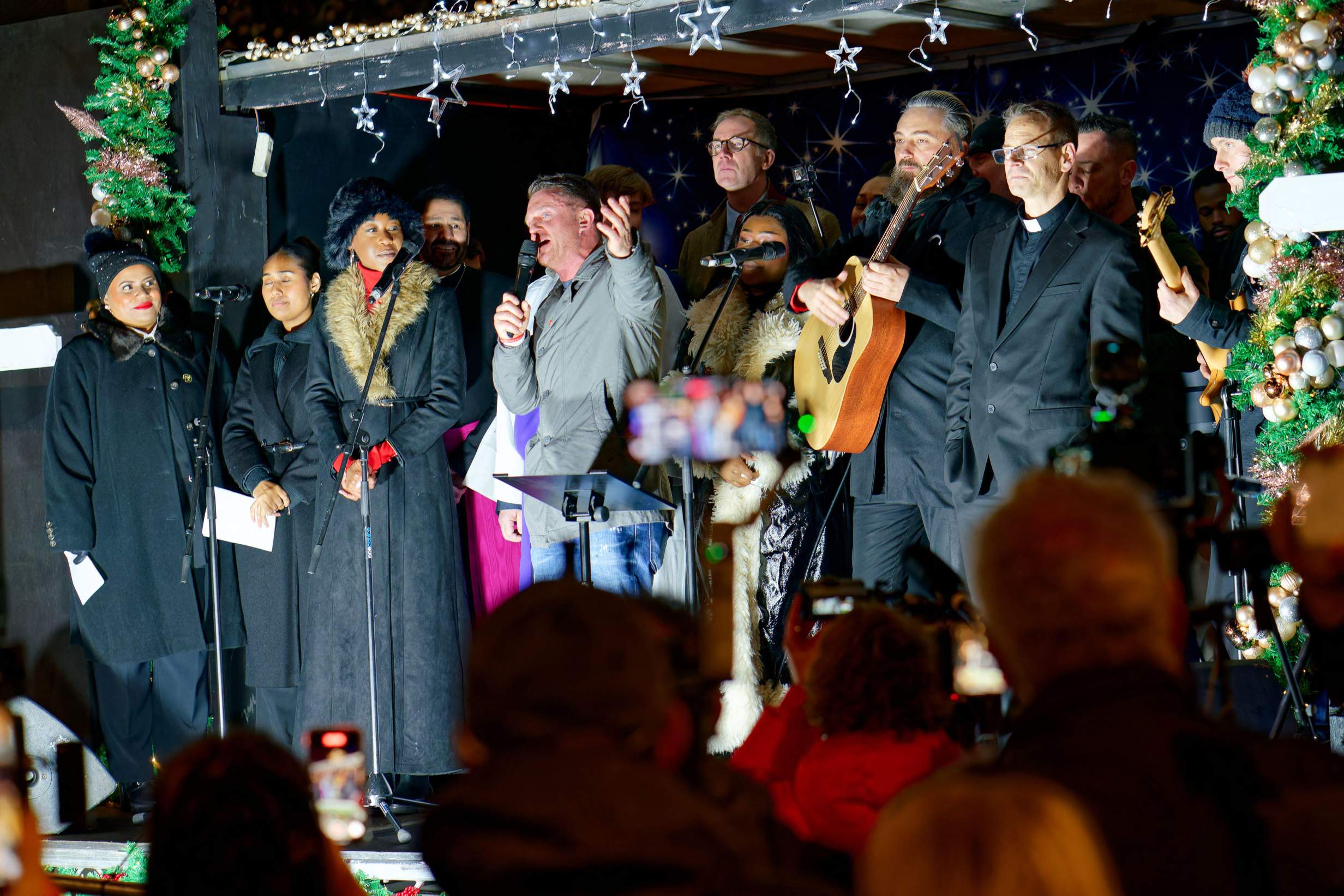
Read our Monthly Magazine
And support our mission to provide fearless stories about and outside the media system
A ‘Make Great Britain Christian Again’ event in August will see speakers aligned to Stephen Yaxley-Lennon (AKA Tommy Robinson) and other far-right figures come together in an attempt to boost MAGA-style ‘Christian Nationalism’ on this side of the Atlantic.
At recent protests and rallies, Robinson has been flanked by pastors wearing religious collars, seemingly an attempt to boost his Christian credentials. The Southampton rally over the murder of Henry Nowak saw several fringe Christian figures speak, with the Lord’s Prayer increasingly a fixture of such gatherings.
Representatives from progressive Christian organisations from several denominations have spoken out against the two-day religious gathering.
Many of those speaking at the Make Great Britain Christian Again conference have become regular faces at far-right rallies, particularly aligning themselves with Tommy Robinson’s brand of anti-Islam and “anti-woke” politics. Some have amassed large social media followings off the back of it.
Organising the upcoming event is Reverend Brett Murphy, who attended Robinson’s ‘Unite the Kingdom’ rally and runs the X page ‘Make Britain Christian Again’.
Murphy is well known for rhetoric seen as Islamophobic, anti-LGBTQ, and anti-migrant.
He has referred to Pride Month as “an abomination”, and the gay pride flag as the “sodomite flag”, has referred to abortion as “modern day child sacrifice”, spoken about “demographic replacement”, and appeared to refer to Green Party leader Zack Polanski as a “sodomite Jew” in a video falsely accusing the Gorton and Denton by-election of being won because of “vote rigging” by “family voting”.
Like Robinson, his brand of Christian nationalism appears to detest Islam.
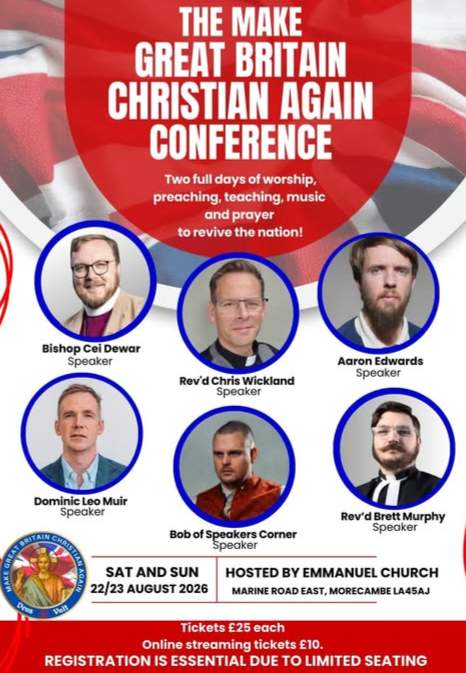
In a recent post on X, he described how: “There is now an all out war against our Christian cultural heritage” and that: “The Left and Islam want to rip away our national Christian identity, they want to strip away any mention of Jesus from children in schools, replacing him with diverse teachings on pagan false religions, particularly Islam.”
After being contacted by Byline Times, Murphy posted our questions on Facebook prior to publication in an apparent attempt to get ahead of the story.
He told Byline Times that he hates “all false religions not just Islam, because the Bible says they lead people to the everlasting fire of hell”, adding: “I do not hate Muslims to he [sic] clear, I simply disagree strongly with Islamic theology and ideology.”
After Reform UK launched its ‘Christian Fellowship for Reform’ programme, Murphy seemingly cemented his alignment with the further-right fringe of politics, tweeting that the move was “likely in response to the very clear statements by Ben Habib, Rupert Lowe and Tommy Robinson that Britain must return to Christianity. Nonetheless it is a good thing”.
Murphy reportedly resigned from the Church of England due to its plans to introduce same-sex blessings to places of worship, and was also for a time under investigation for referring to a trans Archdeacon as “a bloke”. He later joined the ‘Free Church of England’ – affiliated with the Global Fellowship of Confessing Anglicans (GAFCON), a deeply conservative US Anglican group.
ENJOYING THIS ARTICLE? HELP US TO PRODUCE MORE
Receive the monthly Byline Times newspaper and help to support fearless, independent journalism that breaks stories, shapes the agenda and holds power to account.
We’re not funded by a billionaire oligarch or an offshore hedge-fund. We rely on our readers to fund our journalism. If you like what we do, please subscribe.
He only lasted 13 months there before being stripped of his licence and the FCE stopping all services at his church. He now frequently derides the Church of England as “heretics”, something he re-iterated in his response to Byline Times.
Despite being de-licenced by the Free Church of England, he continues to preach from his one remaining base, the Emmanuel Church in Morecambe – the home of this particular gathering.
He claimed to Byline Times that he retains a licence with the ‘Confessing Anglican Church’, apparently issued a day after the FCE revoked his licence in what he referred to as a “kangaroo court.”
Other Speakers at the Conference
Another speaker, Bishop Ceirion ‘Cei’ Dewar, like Murphy, considers the Church of England to be heretical, and was also present at Robinson’s ‘Unite the Kingdom’ march, though this wasn’t his first outing with the far-right agitator and convicted criminal.
At another of Robinson’s events, a year prior in Whitehall, he addressed the crowd, telling them: “This nation of ours is under attack! We are at war! We are at war not just with the Muslim, not just with wokeness!”
Dewar has rejected the idea that he himself is far-right, but did not respond to Byline Times’ request for comment.
Another of the notable speakers at the event is pastor Chris Wickland of the Living Word Church network, who has spoken at anti-migrant protests and at Tommy Robinson rallies, including ‘Unite the Kingdom’, and recently addressed the crowd in Southampton in the wake of the tragic murder of Henry Nowak.
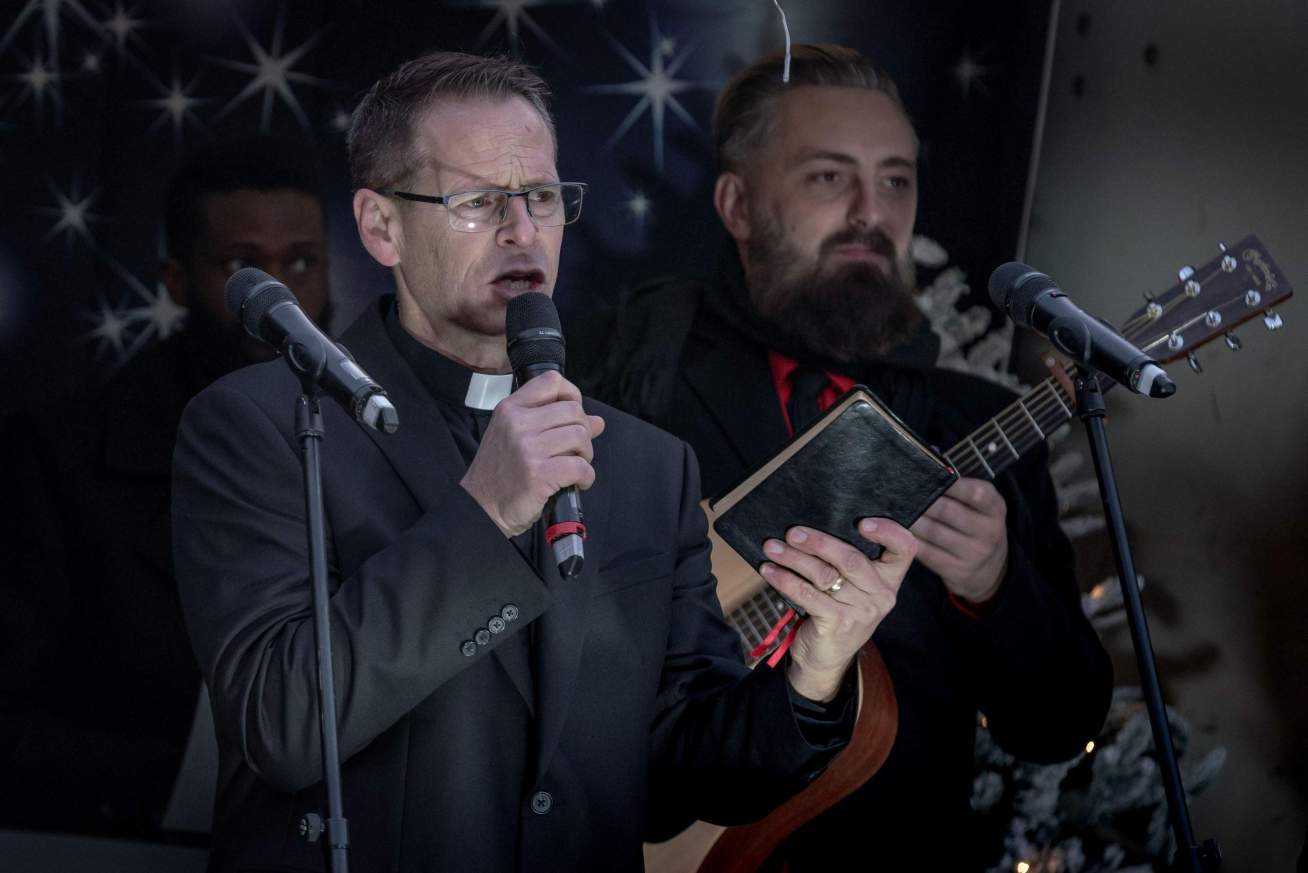
Wickland has claimed at points that preaching the Christian gospel had been made “illegal” in Bournemouth. In Southampton, he framed Islam as a “false god”, called Britain a “Christian nation”, and said that children were “being sacrificed on the altar for political correctness and multiculturalism”.
He has previously rallied against what he refers to as “hyperliberalism” and prophesied that “the agenda of the highly liberal left will collapse and fall” and that “this nation will start to turn back to her God again”. Wickland confirmed to Byline Times that the comments made by him were accurate.
Another speaker, Aaron Edwards, was recently dismissed from his position at the theological education and training institution Cliff College, after posting on X: “Homosexuality is invading the Church.”
Confirming to Byline Times that he identifies as a Christian nationalist, Edwards said that while he did make the above statement, it was “addressed to fellow evangelicals, not to homosexuals per se”, and that he had attempted to clarify that this was not meant as an attack on the gay community.
Standing by its decision, Cliff College released a statement after Edwards’ ousting, which read that “as a Methodist institution, Cliff College is committed to being a safe and hospitable place where those with differing convictions are welcomed and encouraged to live and learn together as faithful disciples of Christ.” The Methodist Conference voted to marry same-sex couples in church in 2021.
Edwards told Byline Times: “I am speaking at the conference because I believe the Church in Britain needs to stand up more courageously to call Britain back to its Christian foundations.”
Others known to be speaking include Bob of Speakers Corner, also known as ‘Bob the Bulldozer’ – affiliated with ‘Soldier of Christ Online’ (SOCO), and Dominic Leo Muir, who on his social media page has written that: “‘Christian nationalism’ has become the weaponised scare label from the secular overlord who wants a toothless church terrified of being viewed as intolerant, bigoted or ‘unspiritual’.”
Don’t miss a story
A Wider Trend on the Right
Many Christians Byline Times spoke to fear their religion is being co-opted to suit the agenda of the far-right, something which is not a new phenomenon, but one which has, they say, become much more pronounced over the last year.
That’s partly due to the rise of the far right and shifting of politics towards the right in general, allowing imported US-style Christian nationalism to find more of a foothold on British soil among the far-right.
Groups like UKIP, under the leadership of Nick Tenconi, have notably drifted in their focus from Euroscepticism to overtly embracing an aggressive form of street-level Christian nationalism, recently performing a ‘Walk with Jesus’ march branded by leading faith-based publications as “the co-option of sacred symbols by a far-right movement that seeks to provide moral cover for an anti-immigrant and anti-Muslim agenda by dressing it up in Christian heritage”.
Robinson himself has also ostensibly converted to Christianity during his most recent stint in prison, and radical right parties like Reform and Restore are increasingly using the language of Christianity in their messaging, often conflating a sense of religious heritage and national identity in an attempt to broaden their appeal.
Speaking to Byline Times, Tommy Sharpe, from Better Story – a multidenominational grassroots movement of Christians seeking to resist “exclusionary distortions of faith” – said: “Parties like Reform, Restore, UKIP, and Advance are reliant on ‘us’ versus ‘them’ politics. They take existing grief within the ‘us’ group about poverty, inequality, isolation, and crumbling public services, and turn this into grievance against ‘them’ groups, and Christian language and symbols can help create this perceived divide between communities.”
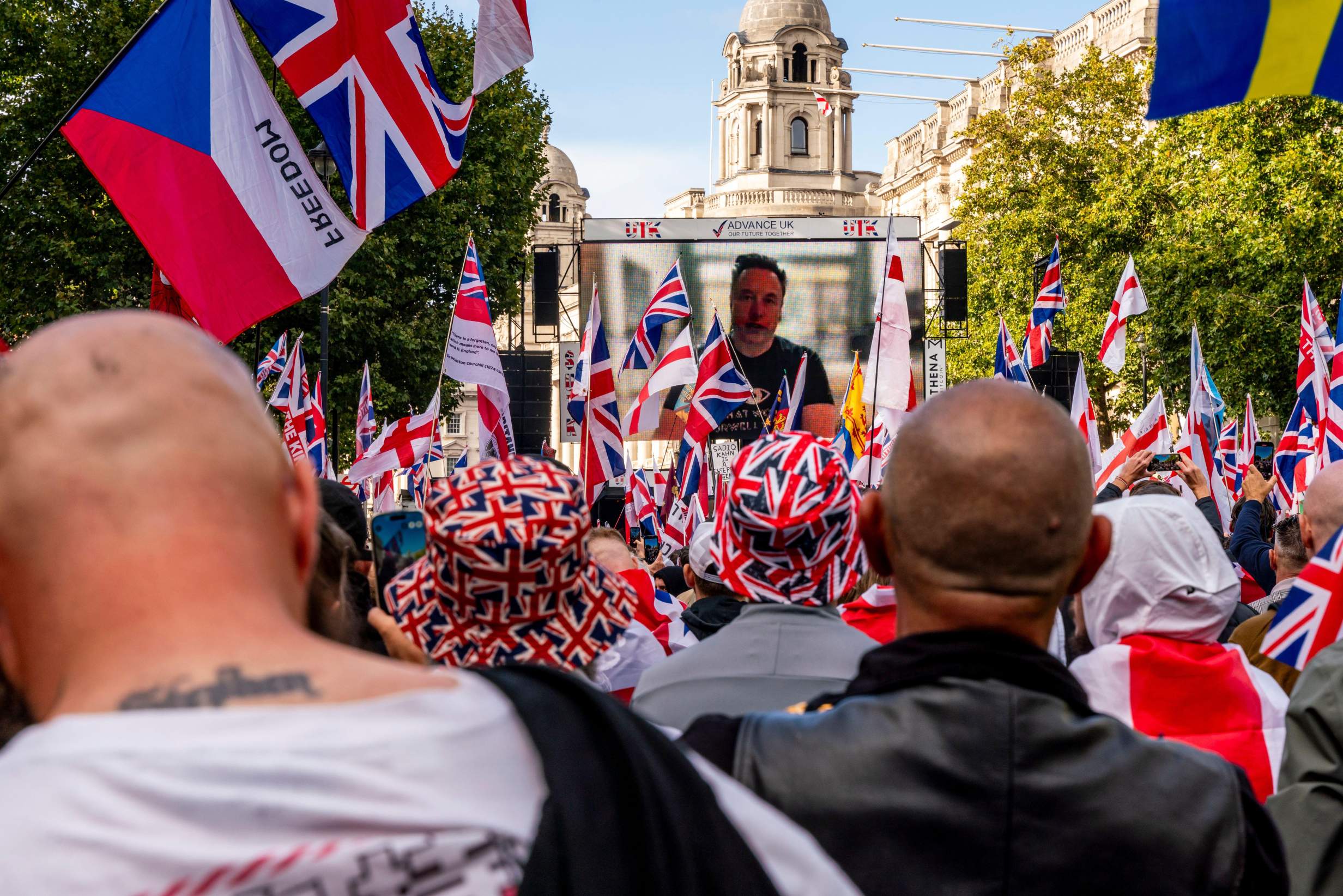
Elon Musk Amplifies Tommy Robinson’s Call to Expel Half of All British Muslims in Speech Staged by Neo-Nazi Linked Group
The demand for the expulsion of millions of Muslim people from the UK received 36 million views after being shared by Musk on his X platform
He added: “Certain far-right actors use ‘Christian’ as a stand-in word for ‘White’ or ‘European’, and because it allows them to draw a firm distinction between the in-group and the out-group whilst appearing less racist… we would refer to this as church-washing.”
Symon Hill, a Baptist minister, university chaplain, and author who campaigns against the far-right, told Byline Times the trend has “really increased in the last year and a half.”
“That’s partly down to the general rise of the far right and the stretching of politics to the right — anti-migrant sentiment has become more mainstream, and people like Farage have reached for language about ‘Christian Britain’ and ‘Christian heritage.’ You’ve got a lot of groups, Reform and others, talking about defending ‘Christian Britain.’”
He believes the idea of defending a “Christian Britain” is bizarre: “When do these people think Britain was Christian? Was Britain Christian when it was engaged in the slave trade? Was England Christian when Crusaders were stealing land in the Middle East, killing civilians as they went? Was it Christian when it was conducting pogroms against Jews? Christianity inspired many people to resist these things.”
As Sharpe puts it: “As Christians, we don’t believe there is such a thing as a Christian country. The Christian faith is universal by definition because no people group has privileged access to God. Jesus says ‘go and make disciples of all nations’, not ‘go and build a Christian nation’.”
In statements, high-ranking members of the church such as the Bishop of Kirkstall have already spoken out about the co-opting of Christianity, stating that the Church must “reclaim both the flag and the faith” from the far-right.
Coalitions of church leaders have also appealed to the Government to protect people against a rise in far-right nationalism, saying that “seeing the rise of the far right preach a message of Christian nationalism that is steeped in white supremacy at the behest of influential social and political leaders in the UK and the US is deeply concerning.”
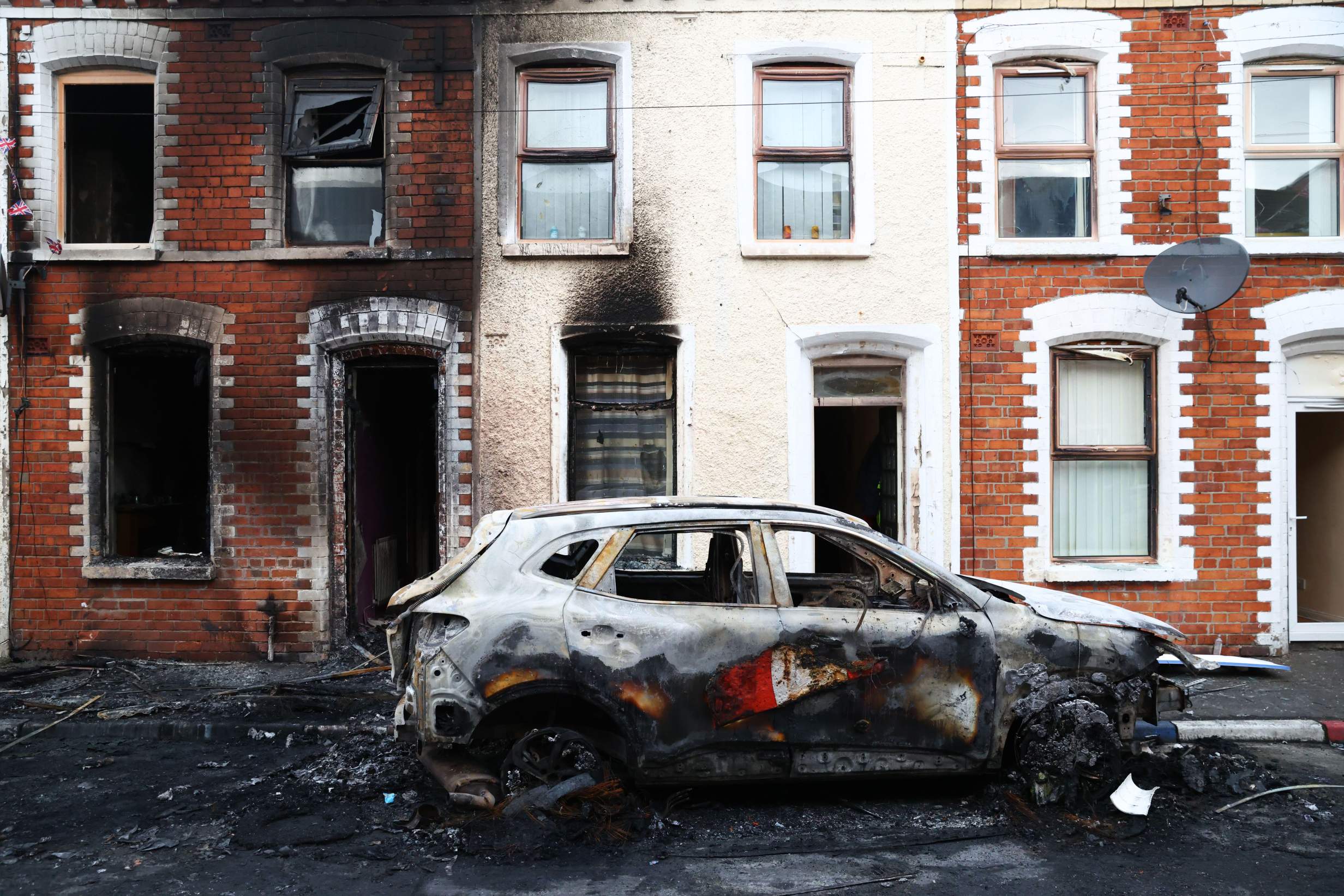
Revealed: The Russian Neo-Nazi Network Pushing ‘White Lives Matter’ Division in Britain – Promoted by Tommy Robinson
As riots spread across Belfast, Tommy Robinson promoted a movement founded by a sanctioned Russian oligarch, which has pushed white supremacist propaganda about the death of Henry Nowak
Christians Push Back
Baptist Minister Symon Hill tells Byline Times: “There’s still a tendency in some places to think, ‘we’d better not mention the Christian far right, because we’re just giving them extra publicity.’ I think that ship has sailed — I think they’ve gained plenty of publicity themselves, and we need to be tackling them now. It’s now a question of what we actually do about it.”
There is an irony, Hill says, in that while many of these speakers cite certain passages from the Bible, the ones which conveniently fit their narratives, “very rarely do they actually mention the teachings of Jesus, the life of Jesus, what Jesus said or how he taught people to behave towards each other.
“People who want to worship Jesus without following Jesus tend to end up in a place where they talk about a God of power rather than a God of love.”
Also highlighted by those who spoke to this publication was the important point that, while it could be said of many members of the far-right that they are exploiting Christianity for their own ends, there are also many people of actual faith who could be easily susceptible to being drawn into this dark and isolationist brand of faith-infused radical politics, while genuinely believing in an interpretation of the Bible.
As Sharpe puts it: “There are many complicated reasons that individuals become involved in far-right political movements. This is also true of Christians. For parts of the church, the ethical priority is the prevention of assisted dying and abortion and the promotion of conservative interpretations of marriage and sexuality.
“Care for the foreigner and the vulnerable, peacemaking, and anti-poverty work are seen as secondary. Because far-right parties and movements are increasingly speaking into these ethical concerns, they have become an attractive political option for a minority of Christians,” he added. He believes some Christians perceive renewed interest in Christianity as a recruiting ground, giving them “new opportunities to evangelise”, as well as a fear of Islam in general.
Hill argues it is “dangerous to just dismiss the ‘Christian far right’, and assume it’s purely performative.”
But he also notes, in contrast to what perhaps is the dominant current understanding of this melding of ideologies, that “the narrative that conservative Christianity is growing while liberal Christianity is declining is very simplistic.”
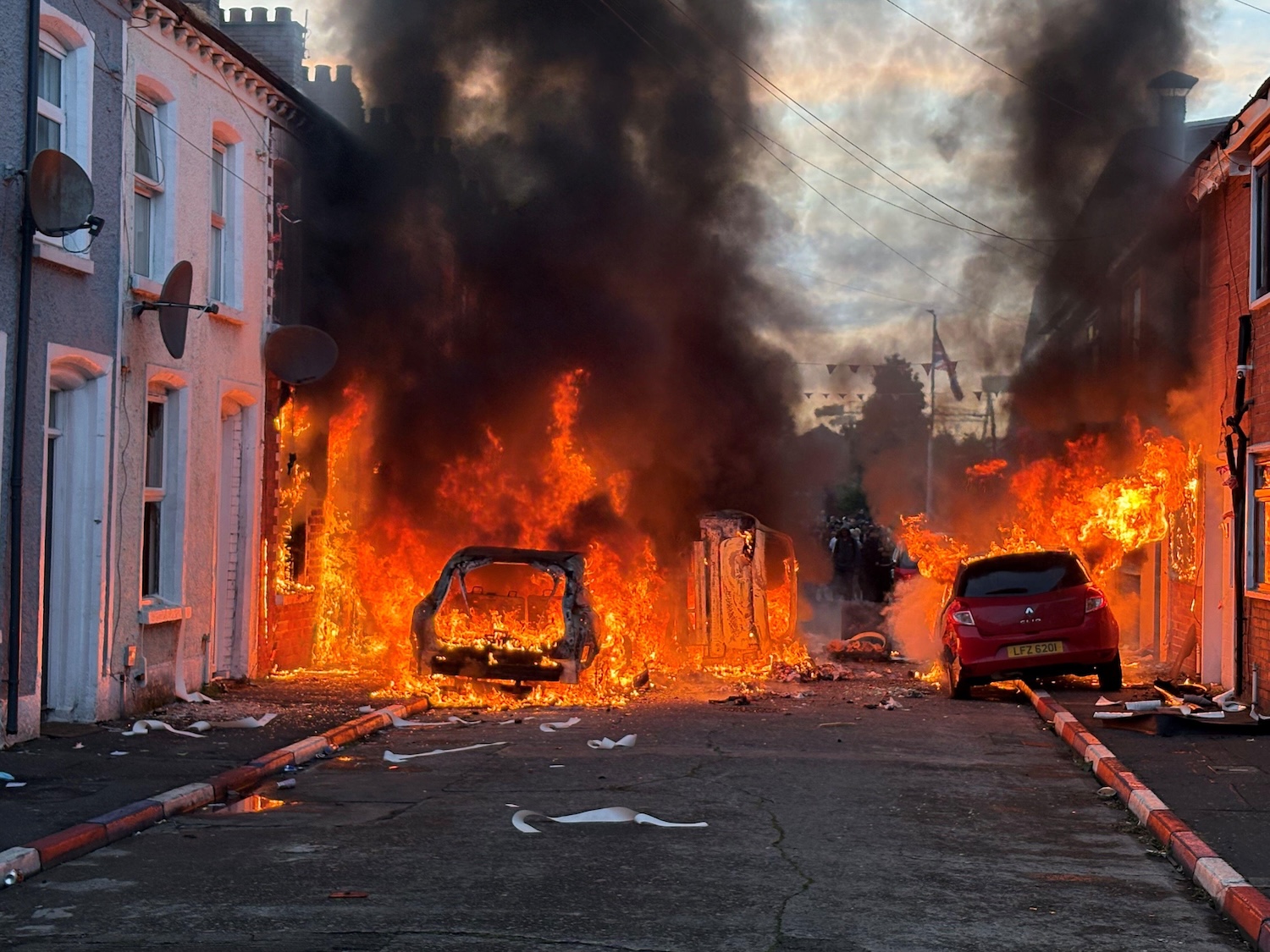
Tommy Robinson, Nigel Farage and the ‘Pure Cold Rage’ Used to Trigger a Racist Pogrom in Belfast
Mainstream politicians have stood by as the global far-right campaigns for anti-migrant violence on our streets. Now we’re suffering the consequences, argues Adam Bienkov
“Beyond the legal or institutional picture, there’s a more lively, radical, inclusive Christianity at the grassroots, reaching people who’ve traditionally been alienated by Christianity.”
However, he argues there’s also an upsurge of interest in “genuinely radical, progressive Christianity”, and that through his work as a chaplain, he sees many “younger, LGBTQ+ people… who are so used to homophobic, transphobic Christianity, that they’re enthusiastic when they encounter Christians supportive of LGBTQ+ inclusion.”
Hill says that he personally has seen “a revival of interest among younger LGBTQ+ people in the progressive wing” of Christianity as well – citing examples of Metropolitan Community Church in Brighton, Renew Inclusive Church in Cambridge, and St Claire’s in Coventry.
In the parable of the Good Samaritan, Hill says: “Jesus demonstrates that the category of ‘neighbour’ is not limited to people like us and explicitly calls his followers to love those who are different to them.”
“If we’re going to defeat the far right — if we’re going to help those taken in by far-right myths think differently — I think we need to challenge our own prejudices, learn from each other, and build an alliance of people of different faiths and of none. That means, in resisting Christian nationalism, reaching out to people of other faiths as well as Christians… so we can build better things in society and resist injustice together.”
He added: “Churches that work with people in poverty, that run food banks, have many people in poverty attending them — they’re in a position to bring together people in poverty who are white and people in poverty who are migrants, people of colour who are British and people who aren’t.”
Additional reporting by Josiah Mortimer.
Got a story? Get in touch in confidence on news@bylinetimes.com
holding farage to account #reformUNCOVERED
While most the rest of the media seems to happy to give the handful of Reform MPs undue prominence, Byline Times is committed to tracking the activities of Nigel Farage’s party when actually in power


 Contribute to our #ReformUncovered crowdfunder
 Subscribers Get More from JOSIAH
 Subscribers Get More from JOSIAH
Josiah Mortimer also writes the On the Ground column, exclusive to the print edition of Byline Times.
So for more from him…
