
 Subscriptions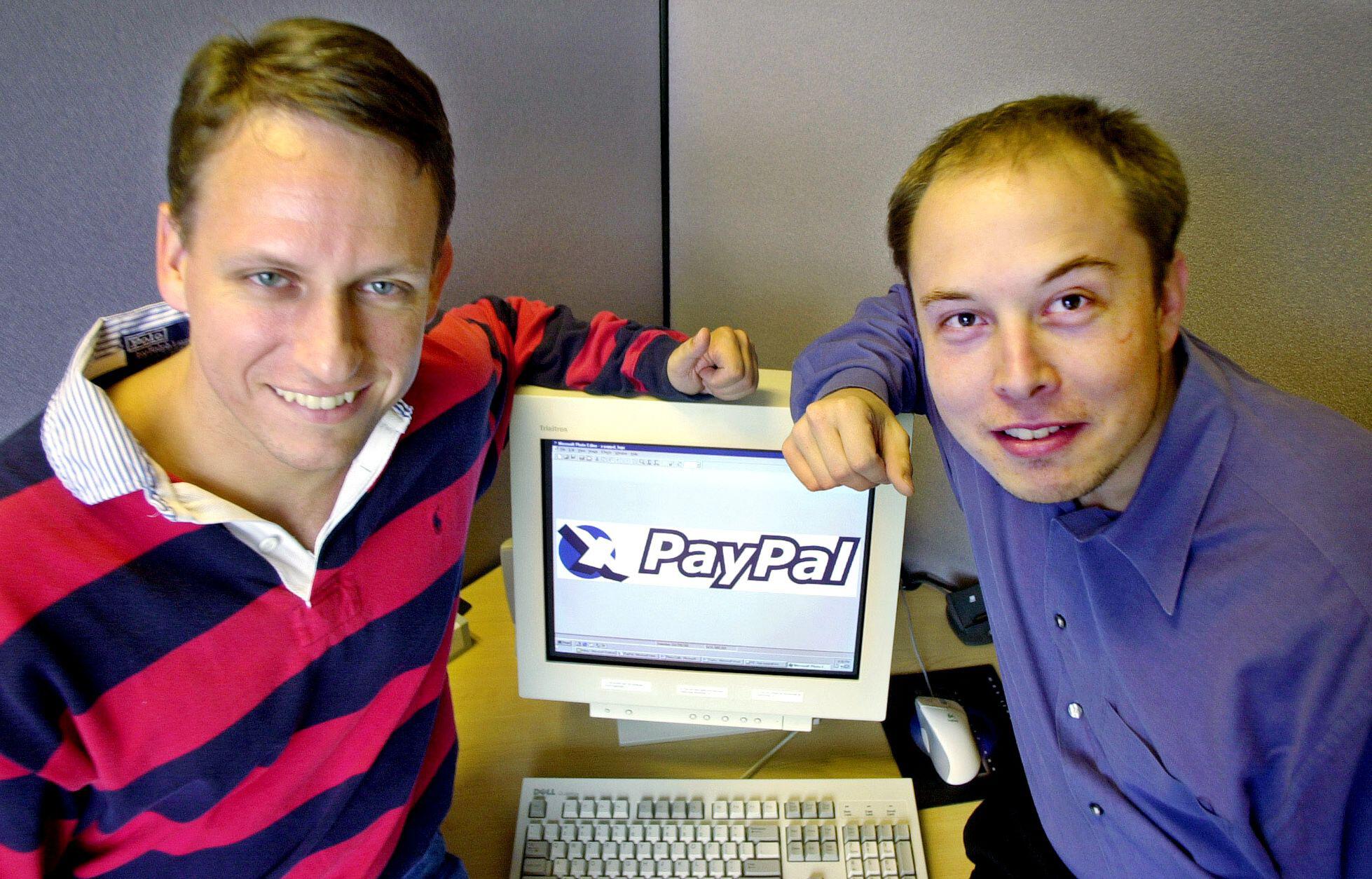

Read our Monthly Magazine
And support our mission to provide fearless stories about and outside the media system
Polls consistently show that a majority of the British public hold a negative view of Elon Musk. Beyond his businesses and immense personal wealth, the US billionaire is best known for declaring that “civil war is inevitable” in the UK, and for amplifying far-right nativist movements across Europe.
But as historian Quinn Slobodian and technologist Ben Tarnoff argue in their new book Muskism: A Guide for the Perplexed, Musk is better understood not just as an erratic culture warrior or an influential billionaire, but as an exaggerated caricature of our broader economy and social settlement.
Muskism, nurtured in the tech fortress of apartheid South Africa and hardened in the gold rush of early Silicon Valley, is a philosophy both cynical and utopian. It amasses vast private fortunes by selling sovereignty – and dependency – to people and states alike. It woos investors with science fiction dreamworlds. And at its extremes, it treats people like bugs in the code, human life as little more than a system to be engineered by an elite minority.
Slobodian spoke to Byline Times about the state-backed foundations of Musk’s success, the power of technological fairy tales, and how a politics that begins on networks now risks reducing our lives – human connection itself – to a programme to be optimised.
“Elon Musk has been quieter recently – at least he’s not dominating the headlines as much – but it feels like we’re still living in his world. How would you best distill this broader idea of ‘Muskism‘?”
Since the late 1990s, a small number of tech firms have come to dominate economic life, and with that, power has concentrated in a very small number of individuals. Even when these companies go public, founders retain extraordinary control through things like dual-class shares. So the old idea of shareholder democracy has been hollowed out. That’s what makes a figure like Musk – a self-described “techno-king” – possible.
What we’re pointing to, then, is first the way the state has felt compelled to prop up and accelerate the growth of Silicon Valley firms, regardless of the phase – whether it’s social media, generative AI, or now hard tech and military applications. US governments, really since Clinton and Gore, have subordinated the future of the American political economy to the direction and desires of Silicon Valley.
Muskism is the outcome of that. It’s a system in which states, individuals, and households become dependent on tech infrastructure and services to exercise basic forms of sovereignty, or even just to carry out everyday tasks. We’re all, quite literally, inside the “walled gardens” of tech firms from the moment we wake up to the moment we go to sleep – and, in many cases, even while we’re sleeping.

Trojan Horse? Rupert Lowe’s Far-Right Restore Britain Is Standing 13 Candidates as ‘Independents’ in One Council
Anti-racist campaigners accuse the ex-Reform MP of seeking to “disguise” the extreme views and affiliations of his candidates
“How did Musk benefit from state intervention? And how do we compare his empire to companies like Peter Thiel’s Palantir, embedded in our militaries and health institutions?“
In the book we call it “state symbiosis.” Musk sought to leverage state capacity and state backstops for his enterprises. You see that from the very beginning: the internet itself is state-funded infrastructure. PayPal, which he co-founded with Peter Thiel, depended on the banking system and federal deposit insurance.
But we see it really clearly when Musk founds SpaceX in 2002, and the company exists largely because of the “network-centric” demands of the Global War on Terror.
Musk steps into that space and, in doing so, helps displace legacy military contractors. He does it in part through a particular kind of legal argument about procurement – arguing for open tenders that allow new entrants, rather than defaulting to established defence firms. What’s striking is that Palantir later uses almost exactly the same argument to secure its own early state contracts.
Then in 2008 Obama advances the idea that one way to achieve national security goals –specifically, disengagement from the Middle East – is to reduce fossil fuel dependency in the US economy. Musk was able to make a persuasive case that Tesla could be the carrier of Obama’s new green automotive future. That helped secure a nearly $500 million government loan at a critical moment – one that effectively saved the company from bankruptcy and set it up for what followed.
As these essential elements of national strategy and sovereignty are contracted out, you can see the dependency begin to build. In the book, we call it sovereignty-as-a-service.
“I’ll confess that, as a teenager in the mid 2010s, I read Elon Musk’s biography and I fully bought what he was selling. Can you speak to the power – and the profitability – of the science fiction stories he tells?“
Silicon Valley was always a high-risk, high-reward environment. What you’re expected to propose isn’t an incremental improvement, but something that creates an entirely new market. You have to come in and say: this product is going to change everything. So exaggeration – what could be called fabulation – is almost a necessary condition of success.
You have to be outlandish. And Musk is interesting in that context, because he’s not an especially polished or charismatic speaker. Like Peter Thiel, he often seems to fumble, to speak in half-formed thoughts. But that itself becomes part of the mystique for investors backing his ventures.
His promises about Mars, we argue, are often really about Earth. The grand visions tend to underwrite much more immediate, terrestrial projects. So, for example, you raise capital for something like Starship by talking about colonising Mars – building a vehicle large enough to carry people and infrastructure there. But the actual application, reportedly is likely to be suborbital delivery for the military.
So you have to take these far-reaching speculations seriously – but also ask what more immediate, material outcomes they’re serving. It’s in that space, between the grand narrative and the practical application, that the engine of Muskism really operates.

The Criminal Past of the Far-Right Anti-Migrant ‘Auditors’ Going Viral on YouTube
Streamers who generate millions of views on Youtube, while posing as ‘citizen journalists’, have a record of abusive behaviour towards women and sexual offences, a Byline Times investigation reveals
“That fabulism, those stories, become a key part of the persona he later builds on ‘X’. Can you speak to that ill-fated decision to purchase Twitter – what is that really about under the doctrine of Muskism?“
Around 2015–16, Musk is arguing that the best way to guard against a runaway, malevolent superintelligence is for humans to merge more fully with machines – to become a kind of human–machine symbiote capable of keeping pace with AI development.
So the mandate, as he sees it, is to deepen that