
 Subscriptions
Read Our Monthly Magazine
And support our mission to provide fearless stories about and outside the media system
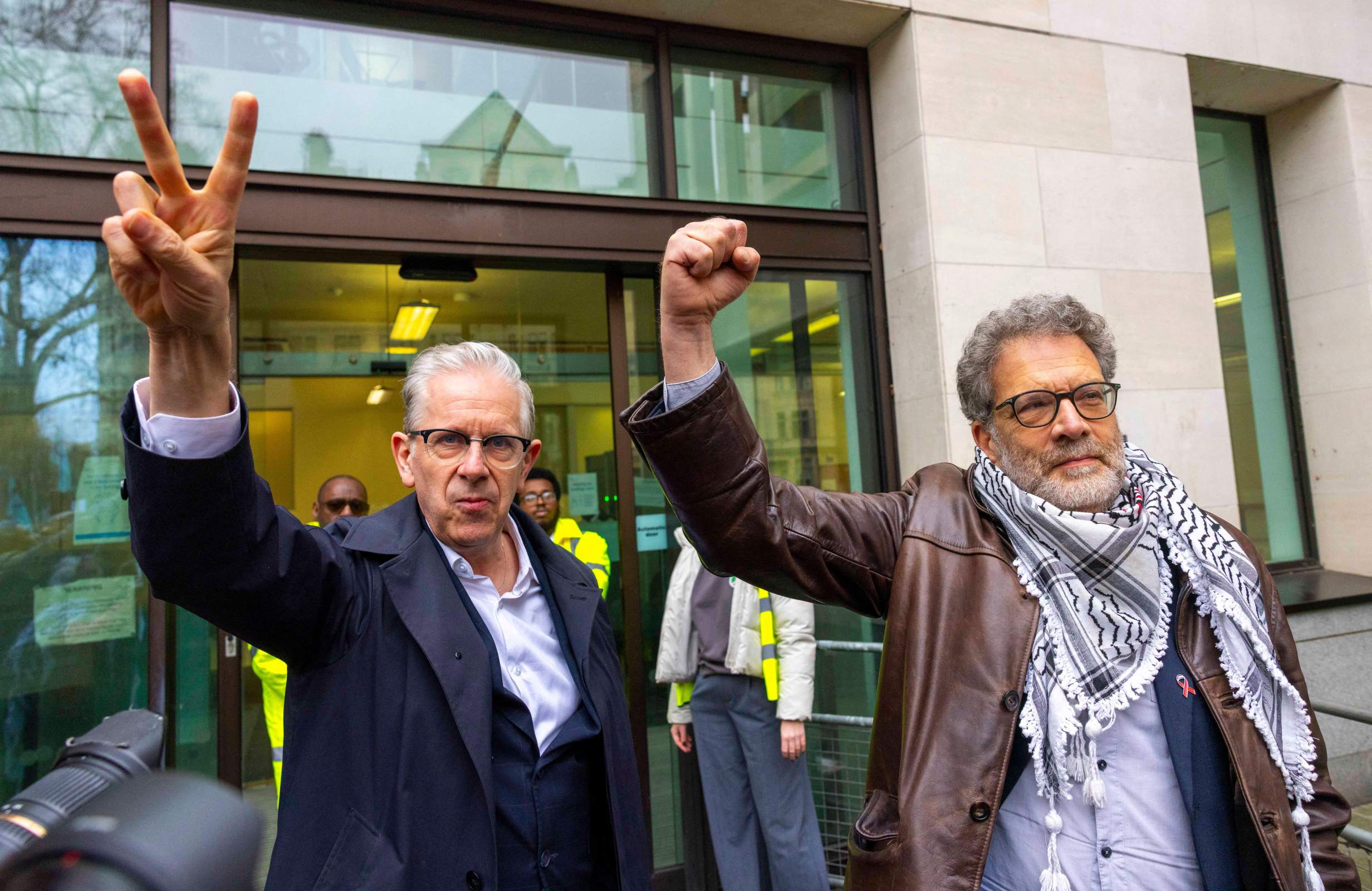
Two pro-Palestine leaders convicted on 1 April of breaching police conditions on a Gaza protest in London have said they plan to appeal.
Palestine Solidarity Campaigner director Benjamin Jamal and Stop the War Coalition vice-chair Christopher Nineham were found guilty at Westminster Magistrates Court of breaching protest conditions on the pro-Gaza protest in central London of 18 January 2025, where the two organisers were arrested.
Both defendants were charged with failing to comply with police orders imposed under section 14 of the Public Order Act 1986, and in Jamal’s case, two charges of inciting others to defy those conditions.
A Stop the War Coalition spokesperson has told Byline Times they will be appealing the verdict to the Crown Court “as soon as we can.”
“If granted, this will mean that the case will have to be reheard, with a different Judge, and sitting with at least two magistrates,” they said.
ENJOYING THIS ARTICLE? HELP US TO PRODUCE MORE
Receive the monthly Byline Times newspaper and help to support fearless, independent journalism that breaks stories, shapes the agenda and holds power to account.
We’re not funded by a billionaire oligarch or an offshore hedge-fund. We rely on our readers to fund our journalism. If you like what we do, please subscribe.
The arrests came after the police imposed conditions requiring a static assembly in Whitehall, and not to enter an area around the BBC’s headquarters at Portland Place, a move which sparked significant anger from pro-Gaza campaigners who wanted to challenge the BBC’s coverage of Israel’s war.
The BBC exclusion zone was imposed on 9 January, with further conditions applied on 15 and 17 January demanding a fixed procession route avoiding BBC HQ, and later a static assembly at Whitehall.
The judgment found that at around 2 pm, Jamal announced from a stage in Whitehall that anti-war coalition leaders would walk as a delegation towards the BBC, carrying flowers. He and Chris Nineham moved up Whitehall with a banner, followed by the crowds. At the first cordon, the crowd chanted ‘let us march’ before police withdrew, citing alleged safety risks.
Both defendants then entered Trafalgar Square, outside the permitted area. They asked the police for permission to continue towards the BBC. Police say the request was refused, but protesters claimed they were invited through.
Shortly after the demonstration, Zack Polanski AM, now Green Party leader, told Byline Times he believed the police “lied” by claiming marchers actively broke through police lines.
The Judge said the conditions imposed were lawful, and that the Commander acted under the correct legal powers and applied the right legal test, claiming there was a risk of serious disruption given “evidence about business disruption, crowd size, serious disruption to worshipers at nearby Synagogues and PSC’s own estimate of 100,000 participants.”
Don’t miss a story
The Judge argued both defendants clearly knew the protest conditions, given their organising roles and involvement in planning the demonstration, and that police withdrawals at cordons were “tactical” decisions rather than reflecting any amendment to the protest conditions.
But Yasmine Ahmed, UK Director of Human Rights Watch, said the ruling would send “shockwaves through civil society.”
“I believe the targeting of Ben and Chris, two prominent civil society leaders, is political and intended to intimidate and silence dissenting voices of the UK’s ongoing support for an Israeli government responsible for a catalogue of international crimes.
“The government has now crossed the Rubicon, and today’s verdict lays bare the sheer scale of powers it now possesses to silence dissent through its alarmingly repressive anti-protest laws. This verdict is a black mark on British democracy and should shame a Prime Minister who built his career defending Human Rights.”
The Judge ruled that Jamal’s speech at the protest, urging attendees to march forward with him, constituted “incitement” to breach protest conditions.
Both defendants were convicted. The Judge said that protest rights, while fundamental, are not absolute and do not permit breaching “lawfully imposed” conditions.
The pair were given a conditional discharge of 12 months for Chris Nineham and 18 months for Jamal. They were also each made to pay the prosecution £7,500 in costs within 12 months.
It comes amid growing concerns about the right to protest being eroded in the UK.

TalkTV Presenter Accused of Assault After Dragging Climate Protester From UK Trump Dinner
EXCLUSIVE: André Walker incident facing police probe over allegations he attempted to punch and kick a protester at a Republicans Overseas event during Trump’s UK visit
Further Clampdown Coming
Labour’s Crime and Policing Bill, currently going through Parliament, is set to create new restrictions on protest rights.
New criminal offences relating to protests include new restrictions on concealing one’s identity at protests. It will become an offence to wear or use items that conceal a person’s identity at a protest in a designated area. A police inspector will be able to designate an area ‘mask-free’ for up to 24 hours if they reasonably believe a protest may involve the commission of offences, and a superintendent can extend that for a further 24 hours.
Defences will be available for health reasons, religious observance, or work purposes – but not for fear of being monitored by authoritarian states, for example, dissidents protesting outside embassies. The penalty for wearing a mask without a legal reason under one of these new orders will be up to one month’s imprisonment or a fine.
It will also become an offence to possess fireworks, flares, smoke devices or similar pyrotechnic articles while taking part in a protest. A defence of reasonable excuse exists, including possession for work. The penalty will be a fine.
The bill also creates a new offence of climbing on specified war memorials and other designated memorials, punishable by up to three months’ imprisonment or a fine.
And it will become an offence to protest outside or in the vicinity of the private dwelling of a wide range of public office-holders (including MPs, councillors, mayors, police and crime commissioners, members of the Lords, Senedd members, and election candidates) for the purpose of “persuading” (lobbying) them in connection with their public role. Official residences like Downing Street, Chequers and Chevening are excluded. The penalty is up to six months’ imprisonment or a fine.