
 Subscriptions

Read our Monthly Magazine
And support our mission to provide fearless stories about and outside the media system
There are many words to be said yet about our dear friend and colleague Paul Conroy, who died unexpectedly at the age 61, but his last photoessay for Byline Times is our first tribute to his sharp eye, big heart and dedication to documenting the truth — Peter Jukes
The moment Trump’s snatch squad bundled Nicolás Maduro onto a rendition flight to the United States, all eyes slid ninety miles across the water to Cuba. The question wrote itself. What fresh punishment did Trump, or more likely his Cuban American attack dog, Marco Rubio, have up their sleeves for their Caribbean nemesis.
We did not have to wait long. Trump, now with the keys to Venezuela’s oil stocks, cut off supplies to an island almost entirely dependent on Maduro’s black gold.
I was not about to sit that one out. I packed my loudest shirt, a pair of flip flops, and took the next flight to Havana on a tourist visa. Havana almost never issues press visas.
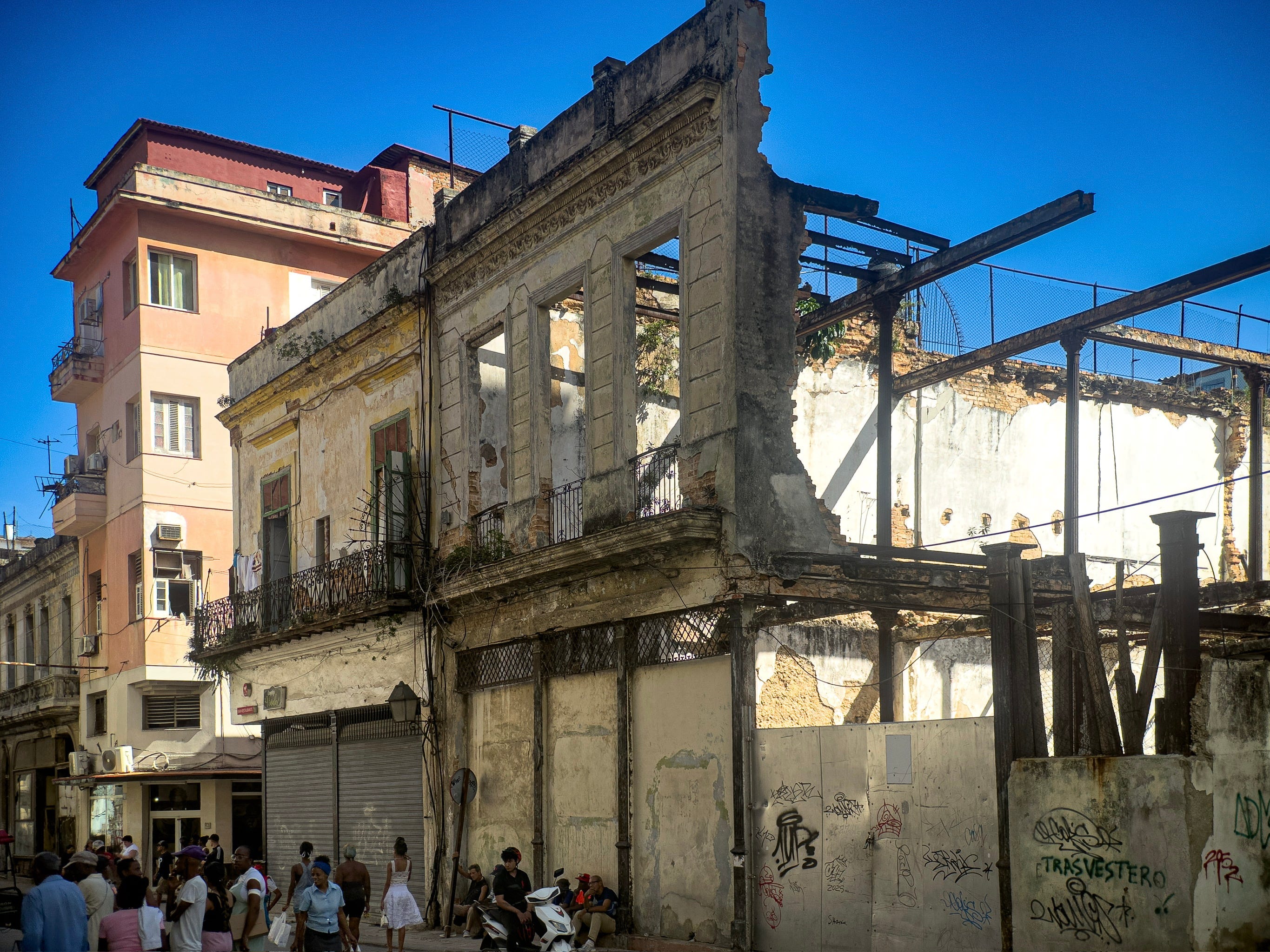
Cuba, already broken by the communist regime’s mismanagement and six decades of US embargoes and general hostility, was in bad shape before Trump even touched the valves.
The central tourist zone has a Potemkin feel. Immaculate stonework, freshly plastered facades, European grandeur under Caribbean light. A few slow tourists drift across the grand plazas while a tired Buena Vista Social Club playlist rattles out from a handful of bored musicians clinging to the last scraps of shade.
In the wide square between palaces and government offices, rows of gleaming pink and blue 1950s Cadillacs sit in formation. Their drivers slump in the shadows, smart shirts clinging with sweat. Any possible customer is treated like royalty. Precious few accept the pleading sales pitch.
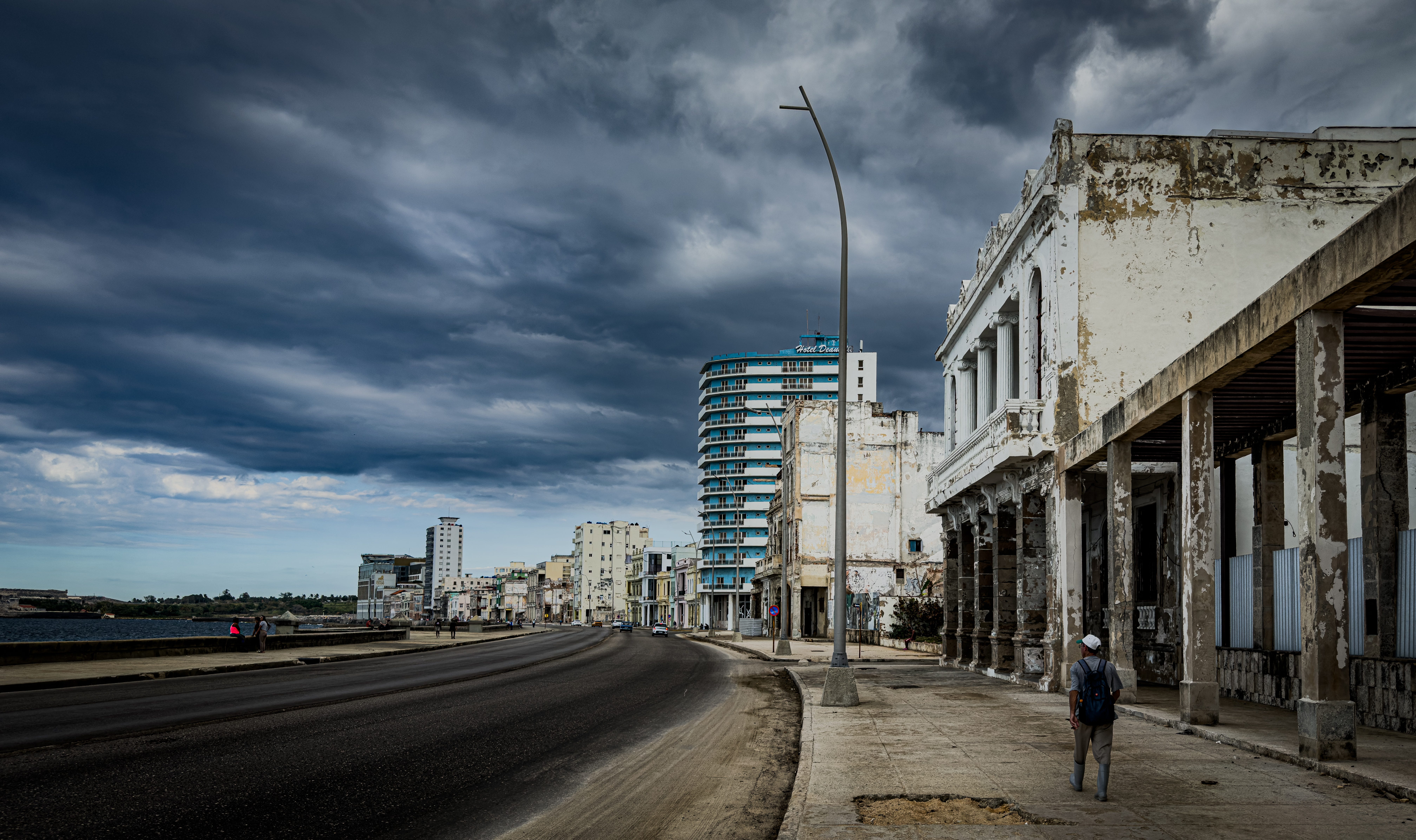
Walk a hundred metres in any direction and the film set ends. The city comes back to life. Street vendors hawk fried dough and plastic cups of sweet coffee. Locals drink in the shade of buildings that have been eaten by salt air and time, held upright by crooked timber braces and welded metal props. Even gravity seems to have lost patience with Havana. Whole sections give up without warning. Building collapses are now a weekly feature.
Semi naked kids run through the wreckage. Their toys are broken bike parts, sun-bleached plastic, balloons filled with water. I pass a shaded doorway and see a pensioner behind a locked iron gate, watching the street as if it were television. In front ofher, on a table covered with white lace, she has laid out the contents of a life. A hairbrush, a mirror, a bread knife, a few chipped plates. Not tourist trinkets. Surplus essentials. Anything that might bring in a few extra, precious pesos.
On the side streets, open-air workshops keep vehicles alive long after their planned deaths. Not the shiny convertibles from the postcards. Workhorses. Battered Ladas and boxy trucks that carry food and people.
I step around a discarded cylinder head. Inside the engine bay, a man with a spanner is elbow-deep in an ancient block, performing roadside heart surgery on an engine that should have been scrapped twenty years ago.
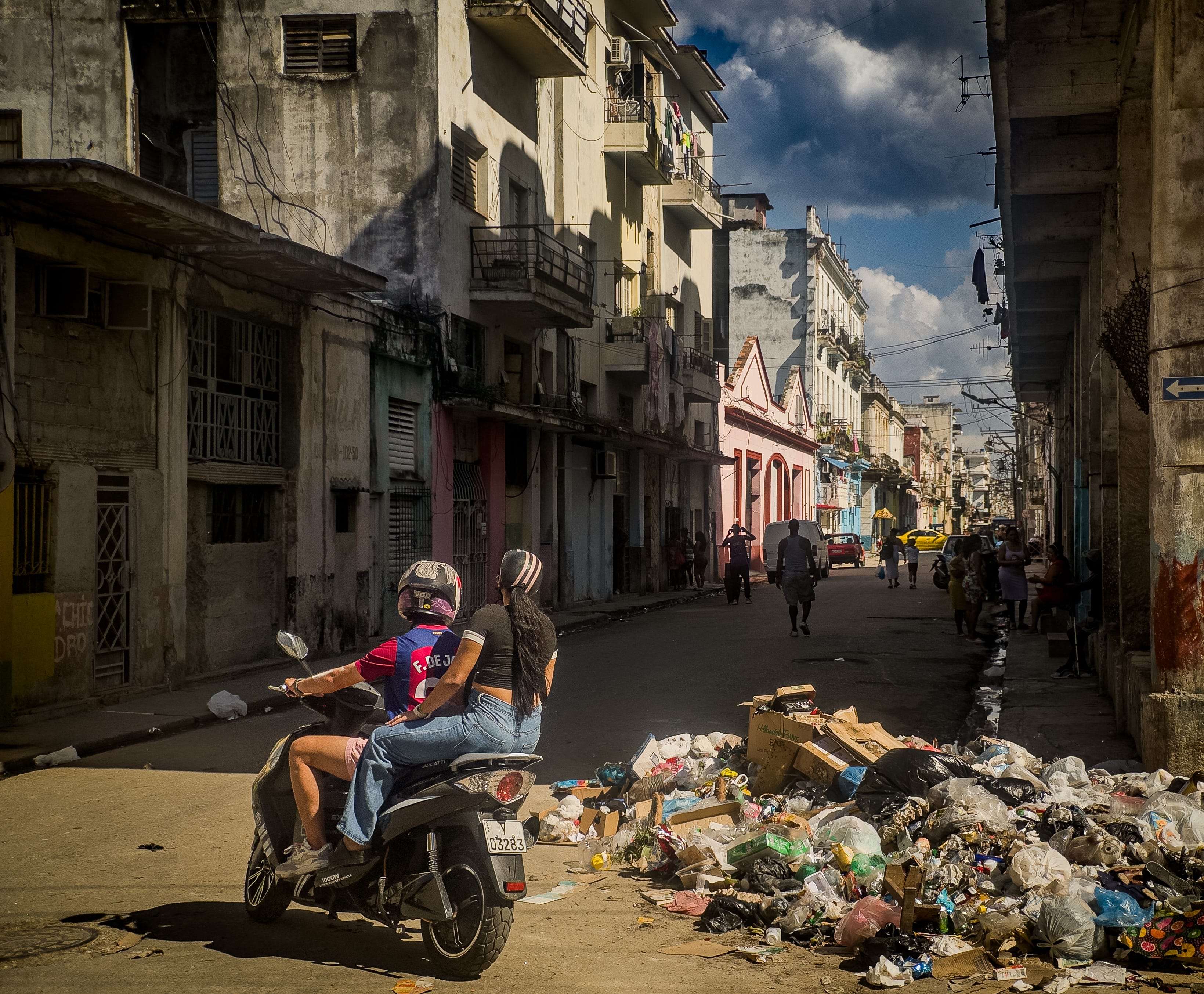
On every other street corner, mountains of rubbish fester in the blistering heat, piled as high as a man. Now and then a scavenger picks through the fly-swarmed remains, hunting for food or anything that can be recycled into a few precious pesos.
The streets sprawl for miles and poverty leaks from every crack. On one corner, an old woman sells petrol by the half litre from plastic bottles to teenagers on wheezing 50cc motorbikes. Outside a bakery, a queue shuffles forward in the heat, people clutching bundles of worn, almost weightless Cuban pesos.